




Digital Reality Match application2026-05-06T13:21:25+00:00

Digital Reality Match [DRM]

Ensure your 3D model always reflects reality. Overcome the limits of scan-based data acquisition by comparing and validating field imagery against the 3D model, allowing automatic Scan vs. BIM workflows and maintaining alignment between planning and execution.

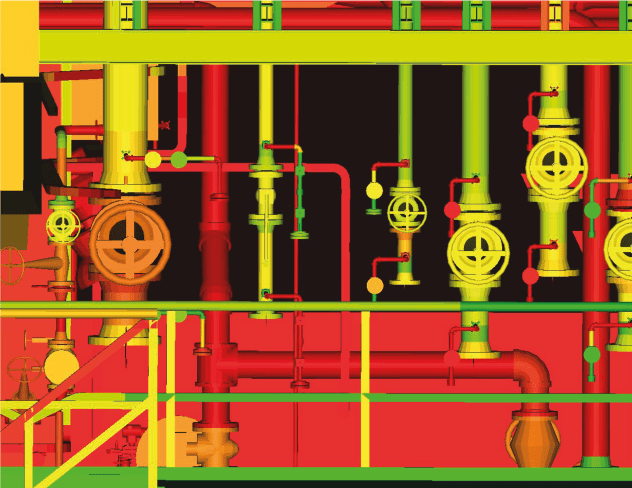
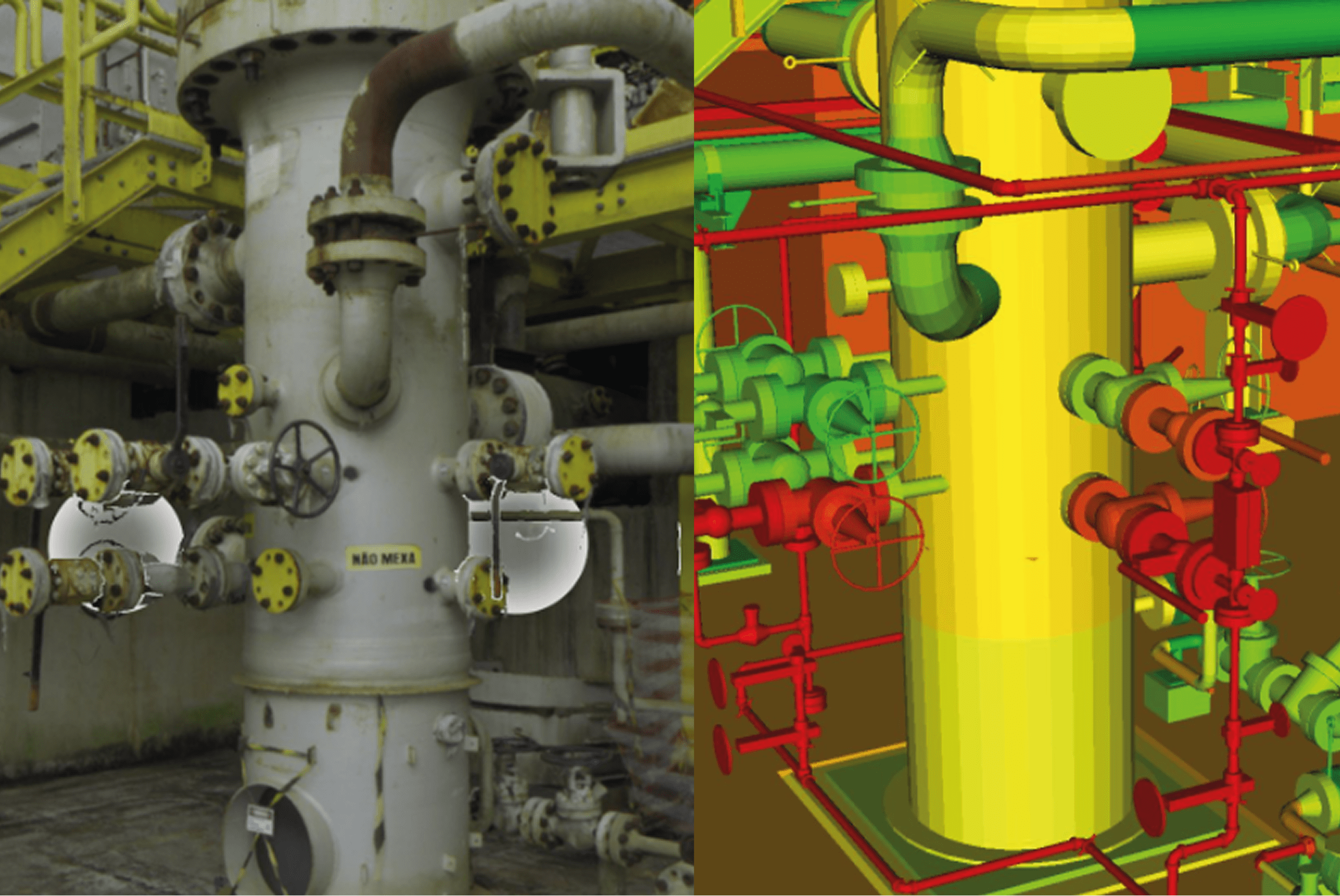
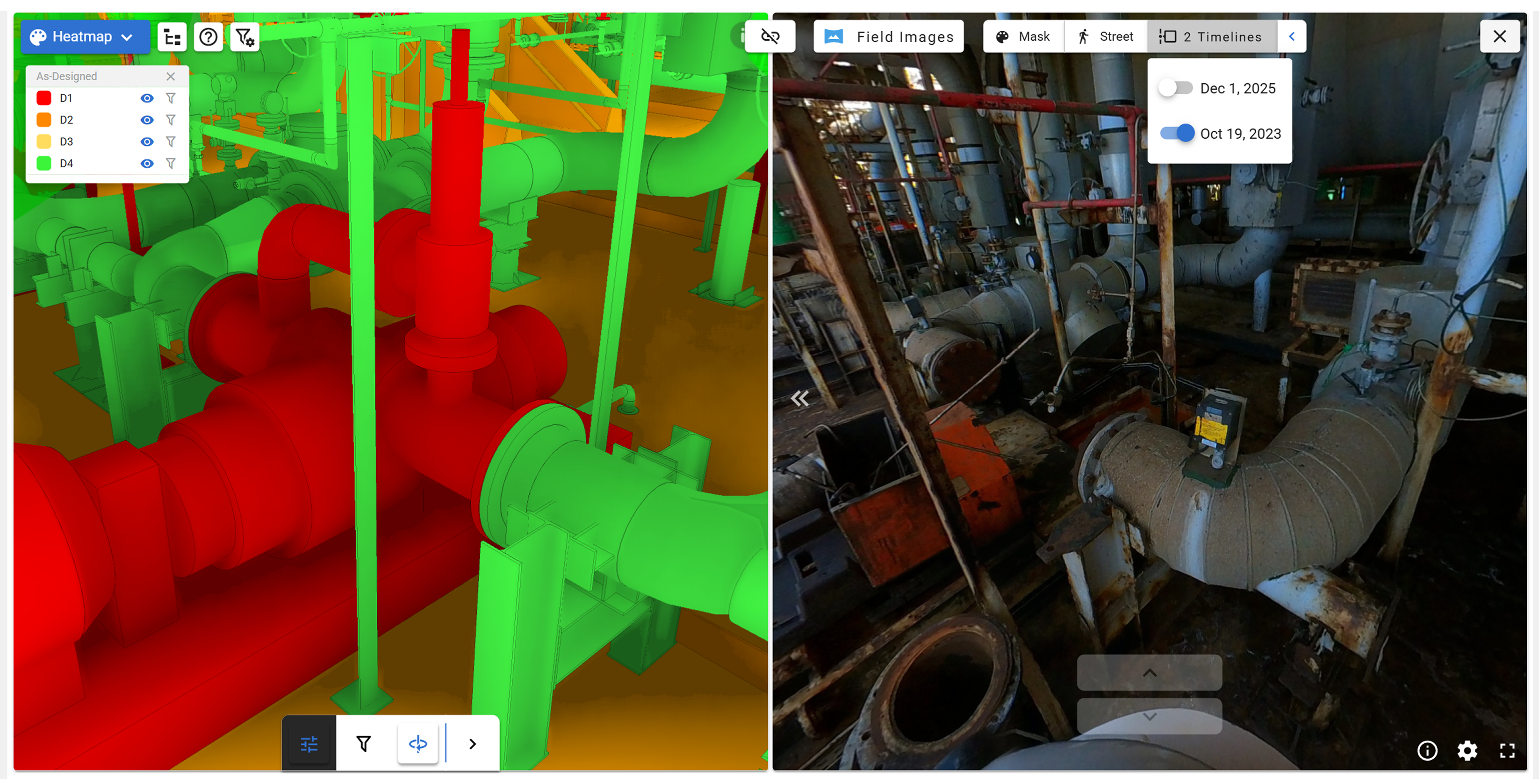
Comparison between field images and 3D model showcasing field divergences

Digital Reality Match [DRM]

Ensure your 3D model always reflects reality. Overcome the limits of scan-based data acquisition by comparing and validating field imagery against the 3D model, allowing automatic Scan vs. BIM workflows and maintaining alignment between planning and execution.

Over the past 9 months, we have avoided 3 field survey campaigns because all the information we needed was already available on Vidya’s digital twin . So less people are being exposed to risk, we are saving time and reducing costs.

ALTERA OCYAN – Senior Integrity Engineer

The opportunities and potential offered by the Management System from Vidya stand out for presenting a market differential where management gains significant added value through the provided tools, which are seamlessly integrated with the planning process.

MODEC – Integrity Manager

Built for Oil, Gas and Energy, Chemicals, Marine, Mining Metal Minerals, Manufacturing, Power & Utilities, and Infrastructure. Where safety, reliability, and performance are non-negotiable.

Impact
generated

Spatially processed images

Centimeter precision

30+ facilities processed.

Over the past 9 months, we have avoided 3 field survey campaigns because all the information we needed was already available on Vidya’s digital twin . So less people are being exposed to risk, we are saving time and reducing costs.

ALTERA OCYAN – Senior Integrity Engineer

The opportunities and potential offered by the Management System from Vidya stand out for presenting a market differential where management gains significant added value through the provided tools, which are seamlessly integrated with the planning process.

MODEC – Integrity Manager

Built for Oil, Gas and Energy, Chemicals, Marine, Mining Metal Minerals, Manufacturing, Power & Utilities, and Infrastructure. Where safety, reliability, and performance are non-negotiable.

Impacted generated

Spatially processed images

Centimeter precision

30+ facilities processed

Over the past 9 months, we have avoided 3 field survey campaigns because all the information we needed was already available on Vidya’s digital twin . So less people are being exposed to risk, we are saving time and reducing costs.

ALTERA OCYAN – Senior Integrity Engineer

The opportunities and potential offered by the Management System from Vidya stand out for presenting a market differential where management gains significant added value through the provided tools, which are seamlessly integrated with the planning process.

MODEC – Integrity Manager

Built for Oil, Gas and Energy, Chemicals, Marine, Mining Metal Minerals, Manufacturing, Power & Utilities, and Infrastructure. Where safety, reliability, and performance are non-negotiable.

Impact
generated

Spatially processed images

Centimeter precision

30+ facilities processed.

How does it work?

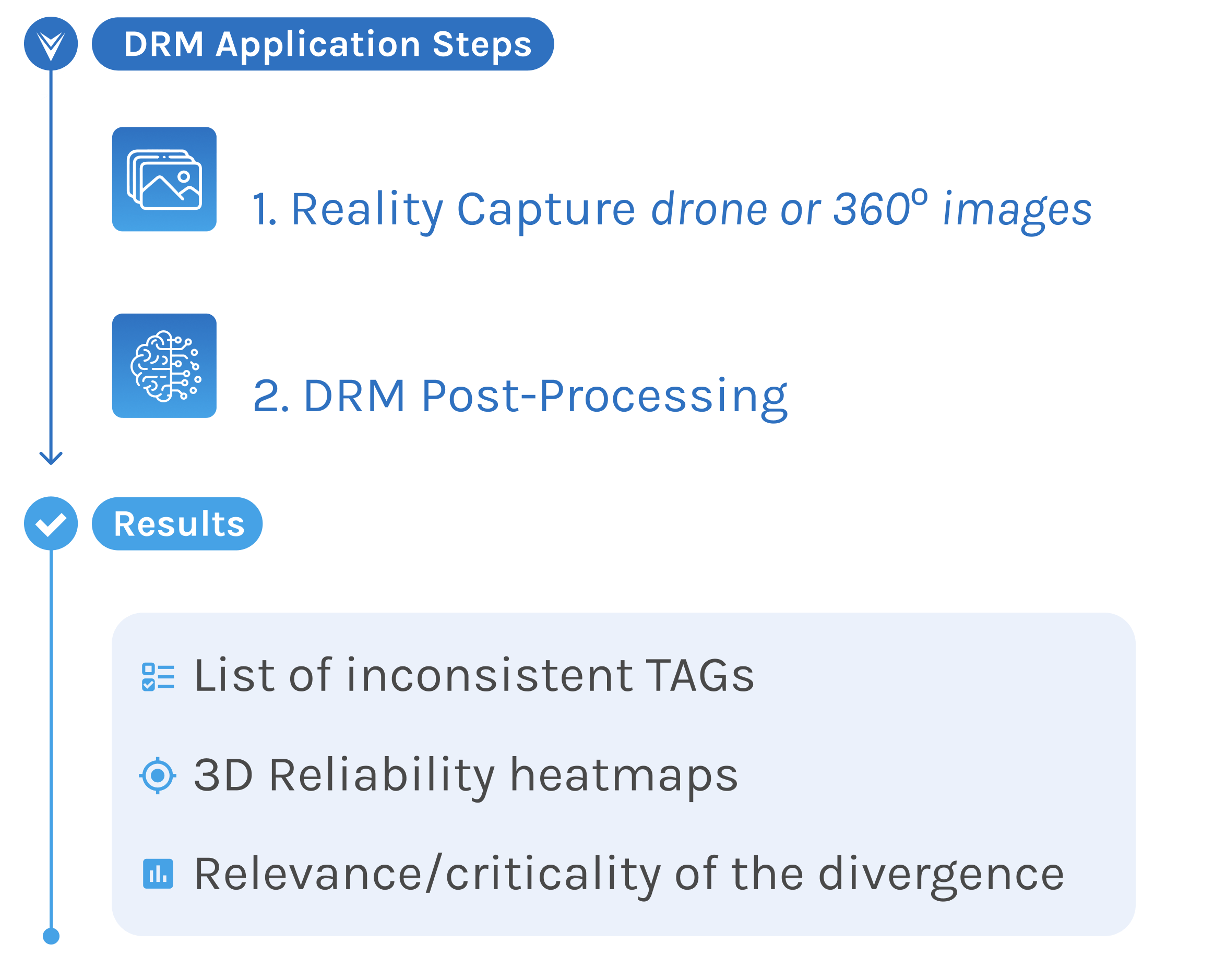
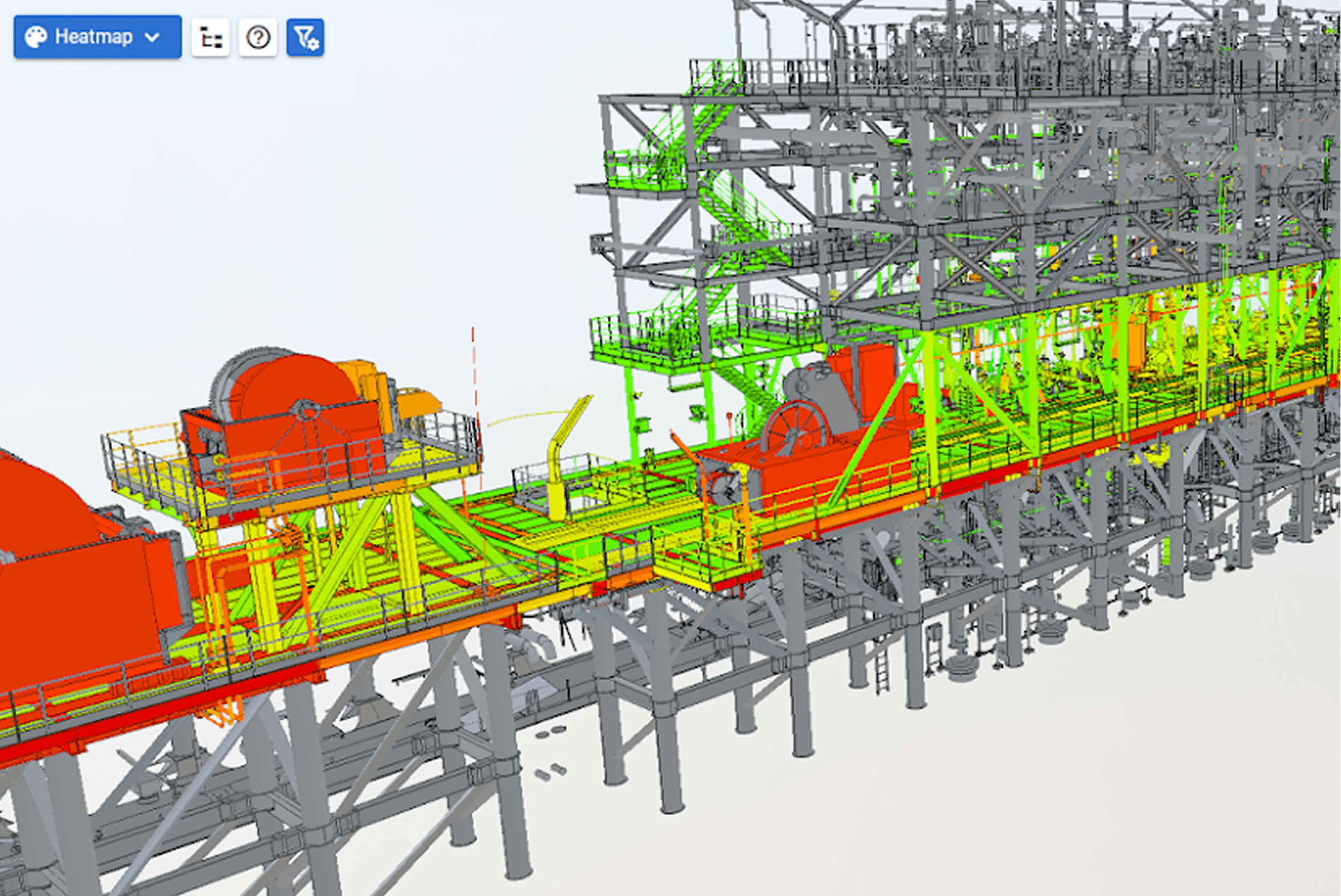
The first step of the DRM workflow is conducting a reality capture campaign using 360° cameras or drone imagery to document current field conditions. The collected images (as-is) are then processed and spatially aligned with the facility’s BIM model (as-designed). Using AI-assisted analysis, the system automatically identifies inconsistencies between the designed and actual conditions, generating a structured list of divergent TAGs, 3D reliability heatmaps, and a criticality assessment of each detected deviation.
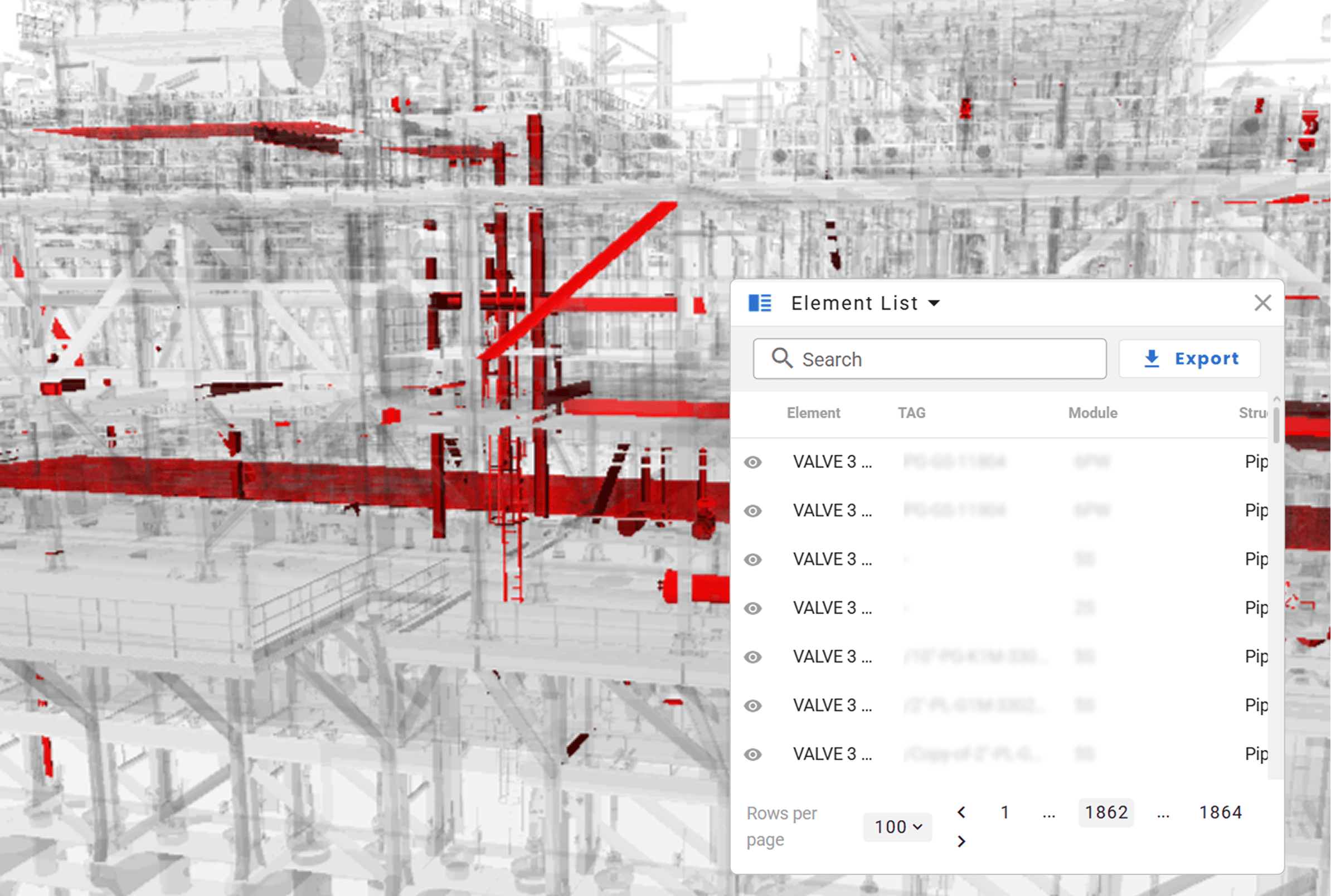
Vidya's system screenshot showcasing list of inconsistant TAGs

List of Inconsistant TAGs

Comparison between field images and 3D model showcasing field divergences

Field evidences of the divergency detected

Heatmap showcasing the relevance and criticality of field divergences

Relevance/criticality of the divergence

How does it work?

The first step of the DRM workflow is conducting a reality capture campaign using 360° cameras or drone imagery to document current field conditions. The collected images (as-is) are then processed and spatially aligned with the facility’s BIM model (as-designed). Using AI-assisted analysis, the system automatically identifies inconsistencies between the designed and actual conditions, generating a structured list of divergent TAGs, 3D reliability heatmaps, and a criticality assessment of each detected deviation.
List of Inconsistente TAGs

Field evidences of the divergency detected

Relevance/criticality of the divergence

How does it work?

The first step of the DRM workflow is conducting a reality capture campaign using 360° cameras or drone imagery to document current field conditions. The collected images (as-is) are then processed and spatially aligned with the facility’s BIM model (as-designed). Using AI-assisted analysis, the system automatically identifies inconsistencies between the designed and actual conditions, generating a structured list of divergent TAGs, 3D reliability heatmaps, and a criticality assessment of each detected deviation.

List of Inconsistente TAGs

Field evidences of the divergency detected

Relevance/criticality of the divergence

Challenges you may be facing:

  • Inefficient Use of Field Resources: Teams spend time validating conditions in the field or resolving unexpected issues that could have been identified earlier, reducing overall productivity.

  • Continuous Alignment Between As-Designed & As-Built: Maintain an up-to-date relation between the digital model and field reality, reducing the gap between how the asset was designed and how it actually exists in operation.
  • Accumulation of Hidden Discrepancies: Without continuous validation, small inconsistencies build up over time, increasing the likelihood of major disruptions during critical activities.

  • Planning-to-Execution Misalignment: What is planned based on the model does not match field conditions, creating a disconnect that impacts scheduling, resource allocation, and execution reliability.

  • Compromised Safety and Risk Awareness: Safety analyses and risk assessments rely on outdated models, leading to incorrect assumptions about hazards, safeguards, and asset conditions.
  • Fragmented Asset Knowledge: Updates from different teams are not consistently reconciled, causing critical information to remain siloed across systems, documents, and individuals instead of forming a reliable, shared view.

  • Delayed Decision-Making: Uncertainty about actual asset conditions forces teams to pause, verify, or revalidate information before proceeding, slowing down operations.

Struggling with laser scans?

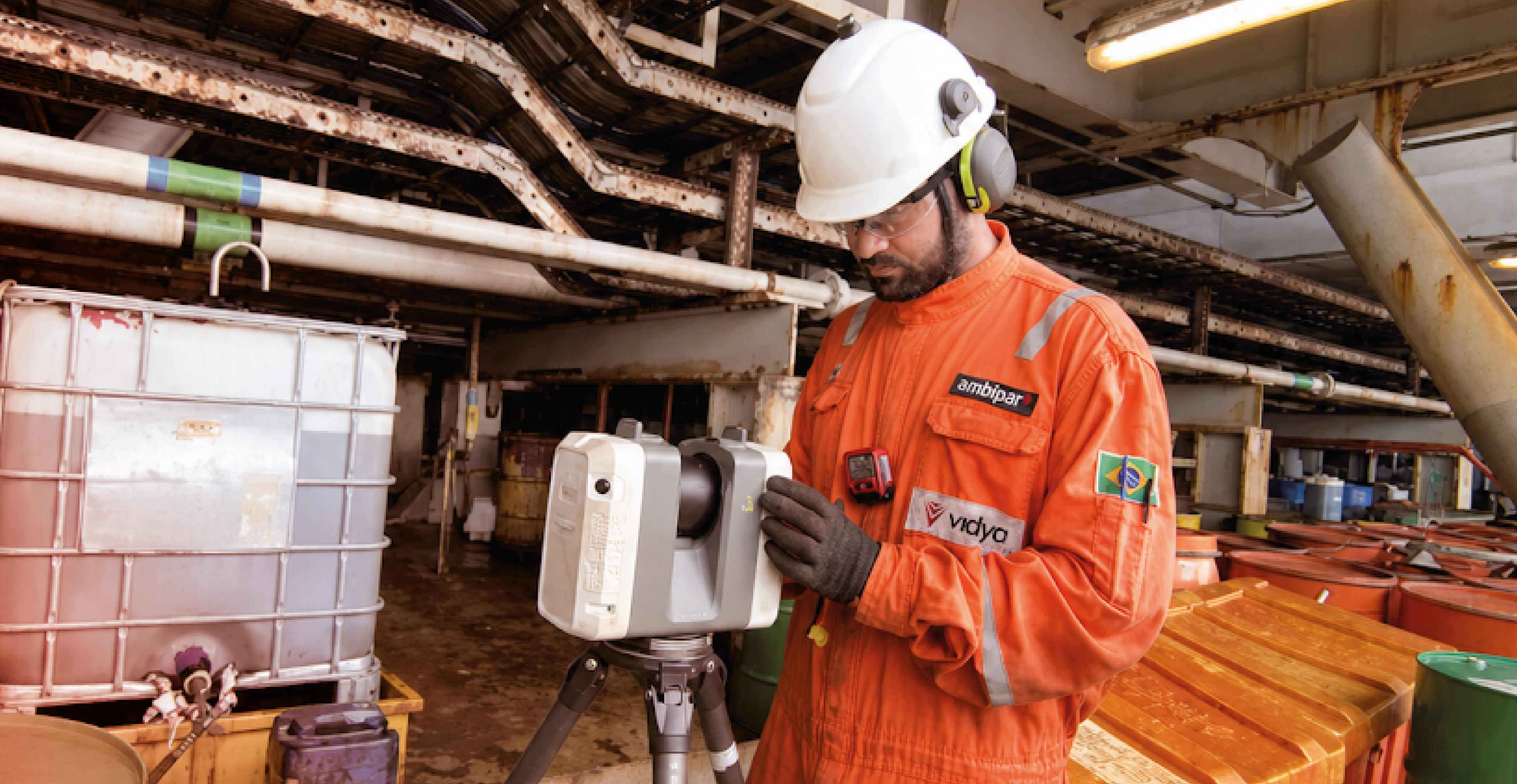
Laser scanning delivers high accuracy, but it comes with trade-offs that limit its availability and scale. Acquisition requires specialized equipment and teams, making campaigns expensive and infrequent. Even when data is captured, alignment uncertainty and heavy processing slow everything down.
The result: highly precise snapshots, but no continuous visibility.
Vidya employee on the field scanning an industrial facility
Vidya's system screenshot of a Comparison between field images and 3D model showcasing field divergences

Precision alone doesn’t scale

Vidya’s Digital Reality Match (DRM) shifts the focus from millimetric precision to operational viability. Using field images (such as 360-degree videos and drone photos) instead of scans, DRM enables faster, lower-effort reality capture across larger areas. This makes it possible to validate asset conditions more frequently, not just occasionally.

With lighter data and automated comparison, discrepancies can be identified sooner without the overhead of point cloud processing. DRM doesn’t replace laser scanning. It ensures you don’t depend on it for everything.
Struggling with laser scans?

Laser scanning delivers high accuracy, but it comes with trade-offs that limit its availability and scale. Acquisition requires specialized equipment and teams, making campaigns expensive and infrequent. Even when data is captured, alignment uncertainty and heavy processing slow everything down.

The result: highly precise snapshots, but no continuous visibility.

Precision alone doesn’t scale

Vidya’s Digital Reality Match (DRM) shifts the focus from millimetric precision to operational viability. Using field images (such as 360-degree videos and drone photos) instead of scans, DRM enables faster, lower-effort reality capture across larger areas. This makes it possible to validate asset conditions more frequently, not just occasionally.

With lighter data and automated comparison, discrepancies can be identified sooner without the overhead of point cloud processing. DRM doesn’t replace laser scanning. It ensures you don’t depend on it for everything.
When Digital Reality Match is a must
  • To monitor the progress or status of construction and building projects
  • To measure the effectiveness and track all changes during an extensive maintenance shutdown
  • To support the planning of service life extension campaigns

  • To guide as-built modelling campaigns

  • To keep your digital twin accurate with the least possible effort

  • To map the as-built/as-designed data that may have been lost during the asset’s lifecycle and during MOCs

  • To verify what actually exists in the field when the 3D model no longer reflects reality

When Digital Reality Match is a must

  • To monitor the progress or status of construction and building projects
  • To measure the effectiveness and track all changes during an extensive maintenance shutdown
  • To support the planning of service life extension campaigns

  • To guide as-built modelling campaigns

  • To keep your digital twin accurate with the least possible effort

  • To map the as-built/as-designed data that may have been lost during the asset’s lifecycle and during MOCs

  • To verify what actually exists in the field when the 3D model no longer reflects reality

Why you should detect field divergences with Vidya

  • Broader Asset Visibility: Validate more of the asset, not just selected scan areas, ensuring discrepancies don’t remain hidden outside high-priority zones.

  • More Efficient Use of High-Precision Scanning: Cut costs by focusing laser scanning only where detailed accuracy is required, instead of applying it across the entire asset.

  • Lower Risk of Outdated Information: Shorten the gap between capture and use, improving confidence in asset condition data over time.

  • Corrosion-Linked Safety Analysis: Maintain an up-to-date relationship between the digital model and field reality, reducing the gap between how the asset was designed and how it actually exists in operation.

  • Faster Path from Capture to Insight: Eliminate heavy processing steps, enabling quicker identification of discrepancies without long delays.

  • Reduced Dependency on Specialized Resources: Perform reality capture and validation without relying on laser scanners or highly specialized teams.

  • Early Detection of Meaningful Discrepancies: Identify missing components, unexpected additions, and configuration issues before they impact planning or execution.

  • Validation in Hard-to-Access Areas: Capture and verify conditions in areas that are difficult or impractical to scan, improving coverage through 360-degree cameras or drones, without complex setups or operational disruption.

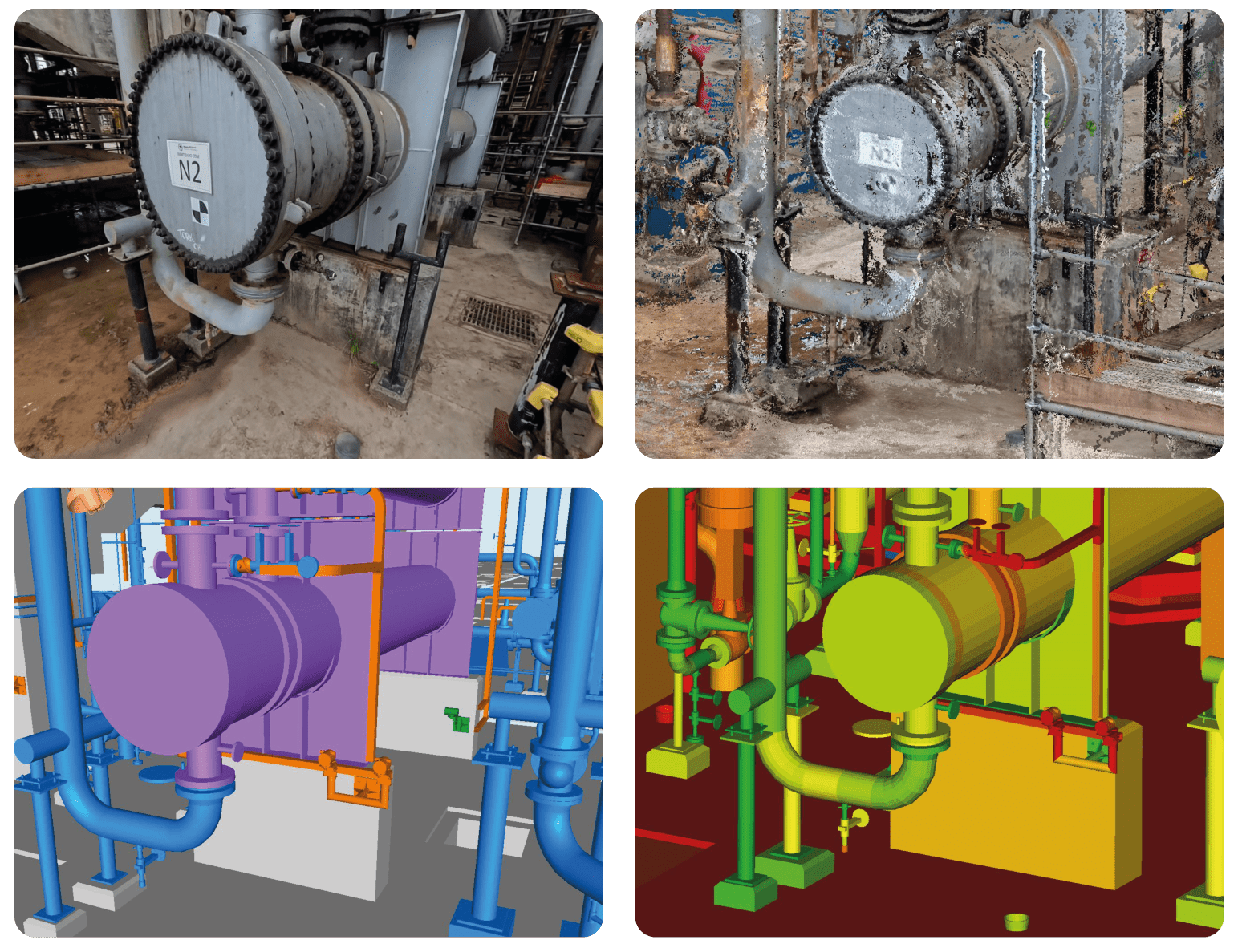
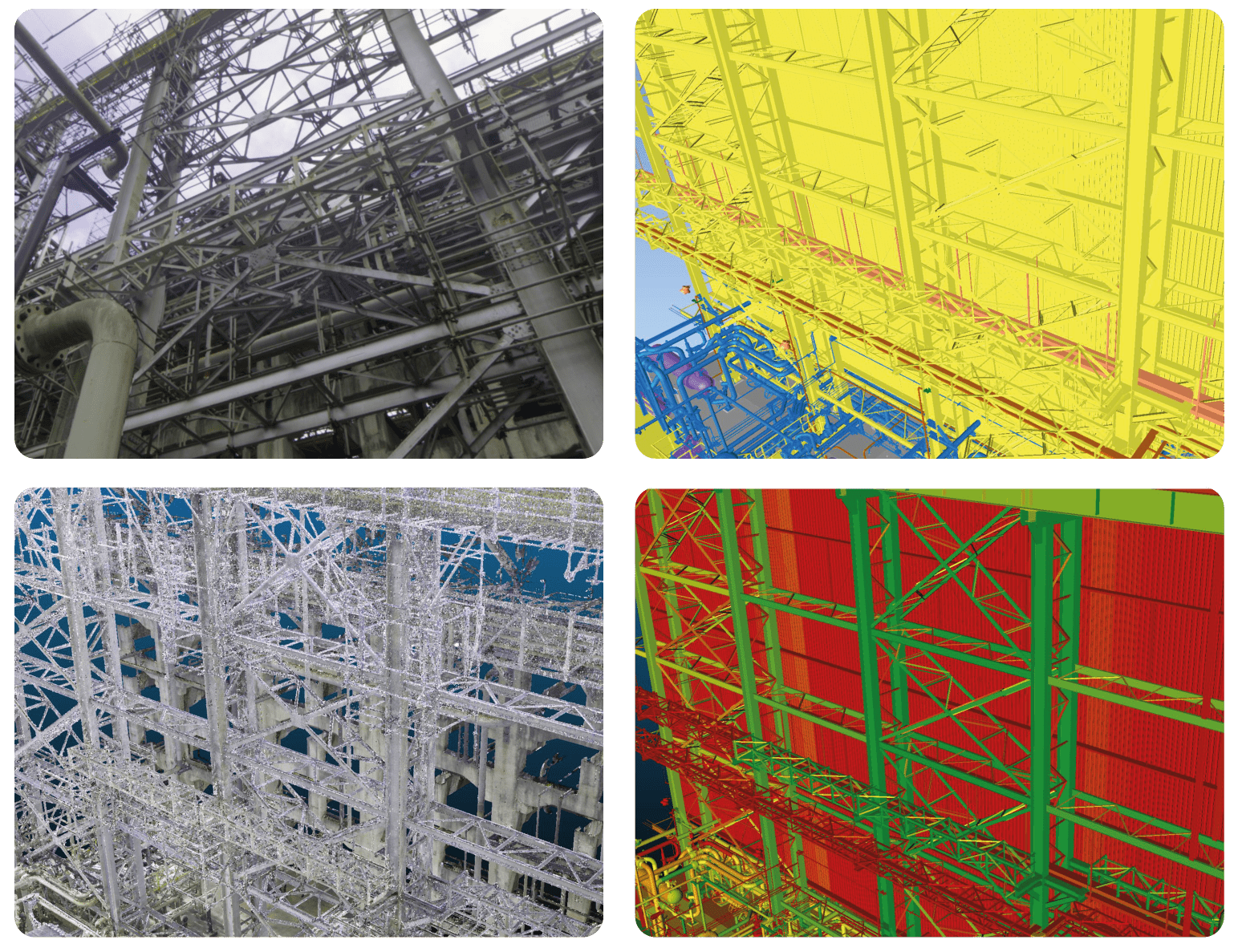
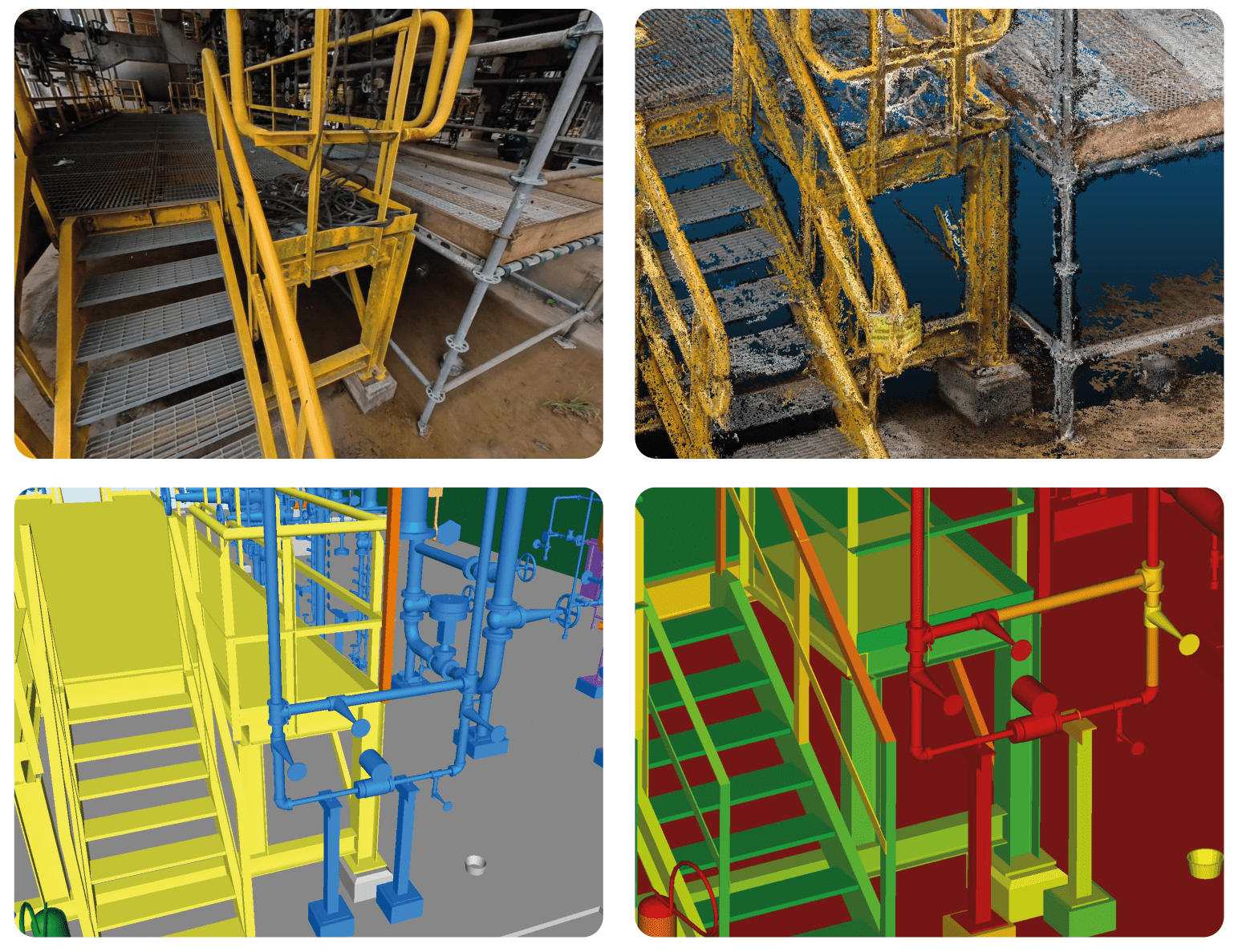
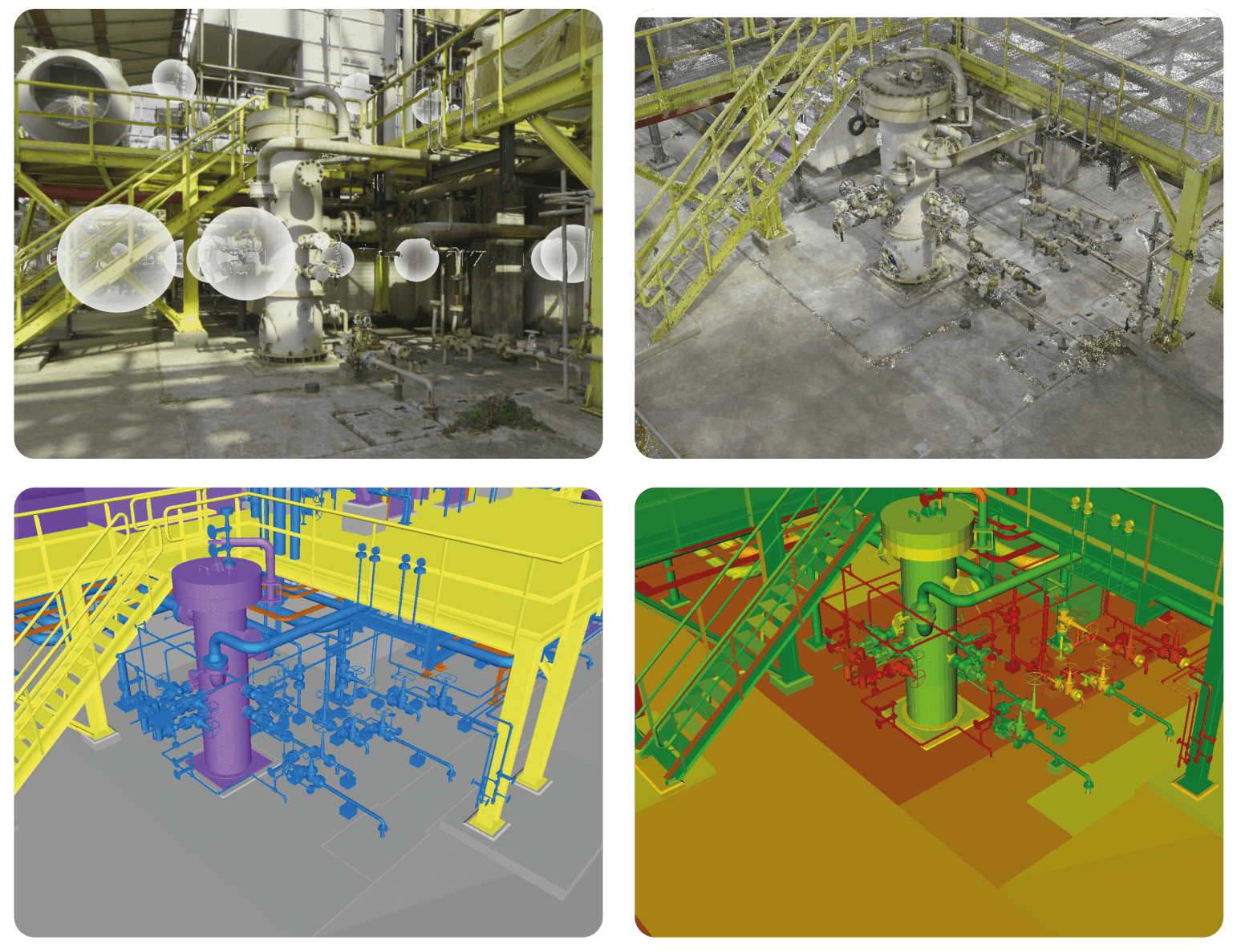
Example of a Digital Reality Match (DRM) Post-processing

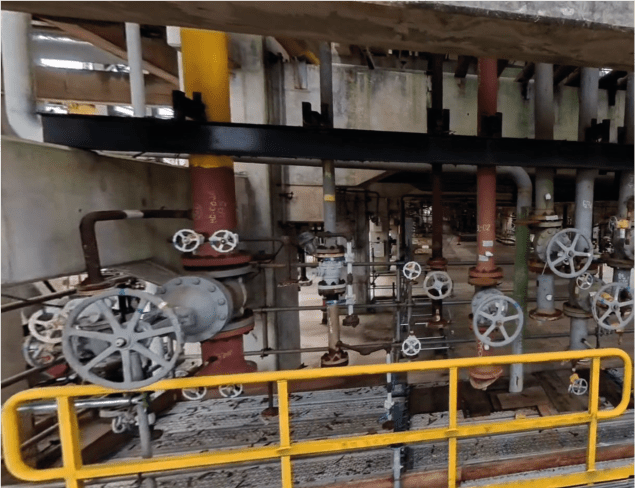
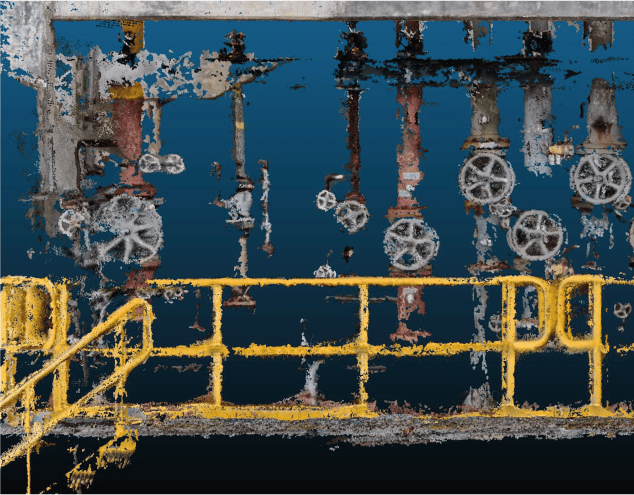
The upper-left image shows the reality capture output. The upper-right image displays the point cloud generated by our pipeline. The lower-left image is the legacy CAD 3D model, while the lower-right shows the same model with a heatmap indicating the confidence level of field discrepancies. Elements highlighted in red represent areas where the AI identified divergences between the model and the captured reality.

Why you should detect field divergences with Vidya

  • Broader Asset Visibility: Validate more of the asset, not just selected scan areas, ensuring discrepancies don’t remain hidden outside high-priority zones.

  • More Efficient Use of High-Precision Scanning: Cut costs by focusing laser scanning only where detailed accuracy is required, instead of applying it across the entire asset.

  • Lower Risk of Outdated Information: Shorten the gap between capture and use, improving confidence in asset condition data over time.

  • Early Detection of Meaningful Discrepancies: Identify missing components, unexpected additions, and configuration issues before they impact planning or execution.

  • Corrosion-Linked Safety Analysis: Maintain an up-to-date relationship between the digital model and field reality, reducing the gap between how the asset was designed and how it actually exists in operation.

  • Faster Path from Capture to Insight: Eliminate heavy processing steps, enabling quicker identification of discrepancies without long delays.

  • Validation in Hard-to-Access Areas: Capture and verify conditions in areas that are difficult or impractical to scan, improving coverage through 360-degree cameras or drones, without complex setups or operational disruption.

  • Reduced Dependency on Specialized Resources: Perform reality capture and validation without relying on laser scanners or highly specialized teams.

Example of a Digital Reality Match (DRM) Post-processing

The upper-left image shows the reality capture output. The upper-right image displays the point cloud generated by our pipeline. The lower-left image is the legacy CAD 3D model, while the lower-right shows the same model with a heatmap indicating the confidence level of field discrepancies. Elements highlighted in red represent areas where the AI identified divergences between the model and the captured reality.

See Digital Reality Match in action

Schedule a Demo & Experience the benefits. Start with a focused scope and expand based on your needs.

Beyond a digital solution, we help you operate with ease without requiring a large upfront commitment. By scheduling a meeting, we will:

  • Understand your challenges: We’ll listen closely to your top concerns around field divergence detection and the current methods you’re using.

  • Showcase our Digital Reality Match application: Discover how our technology streamlines Scan vs. BIM, saving you valuable time and resources.

  • Demonstrate real-world results: See firsthand the impact we’ve achieved for similar companies in reducing field divergence detection issues.

  • Craft a tailored plan: We’ll work together to identify how our solution can specifically improve your field visibility.

  • Propose a pilot: Let’s target a specific area of your operation to discuss field divergence challenges. Experience the results and scale up for total transformation.

Go to Top