
Process Safety Management 101: Hazards, Barriers, and Digitalization
In one of Aesop’s most well-known fables, a boy repeatedly raises a false alarm about a wolf attacking his flock. After several false warnings, the villagers stop responding. When the wolf finally appears, no one comes, and the consequences are irreversible. Industrial facilities face a similar risk. Alarms, safeguards, and barriers are designed to signal or contain deviations before they escalate. But when alarms are unreliable, poorly configured, or excessively frequent, they lose credibility. Operators may become desensitized, and abnormal conditions can gradually be treated as routine. How can organizations ensure that warnings remain meaningful, that deviations are properly [...]

5 Steps to Strengthen Your Static Equipment Compliance Strategy
In large-process industries, static equipment such as pressure vessels, piping, and storage tanks represents the majority of operational machinery. While these assets may not move or rotate like pumps or turbines, their failure can be equally catastrophic, leading to safety incidents, production losses, and regulatory penalties. Understanding the nature and function of these assets is the first step toward building a robust and auditable integrity management framework. And, given the scale of risk involved, ensuring the integrity of static equipment is both a regulatory obligation and a strategic necessity. But what exactly qualifies as static equipment? And why does its [...]

The cost of Ineffective Asset Integrity Management
When a pipe leaks, it’s rarely just a leak. In complex industrial operations, small issues often signal deeper inefficiencies, and when these signals are ignored or mismanaged, the consequences can escalate quickly. From unplanned shutdowns to environmental and reputational damage, the cost of ineffective Asset Integrity Management (AIM) can be staggering. In an industry that depends on reliability and compliance, treating asset integrity as multiple, diffuse tasks rather than a structured, data-driven process is no longer sustainable. Yet, many operators still rely on fragmented systems that hinder decision-making and delay action. But what does it mean to manage asset integrity, [...]
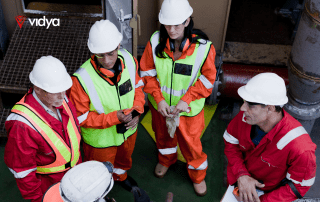
Understanding Shutdowns and Turnarounds: Building Long-Term Resilience in Energy
Production continuity is the gold standard in oil and gas operations, but it’s not always the best path to long-term efficiency, safety, or profitability. At some point in the lifecycle of every industrial asset, stopping becomes necessary. Shutdowns and turnarounds are moments of strategic pause that allow for essential maintenance, inspections, upgrades, and planning for the future. Far from being interruptions, these events are critical for operational excellence. Why Shutdowns Happen Shutdowns are usually driven by the need to preserve asset integrity, meet regulatory requirements, or integrate improvements. Over time, even the most robust equipment wears down, and [...]
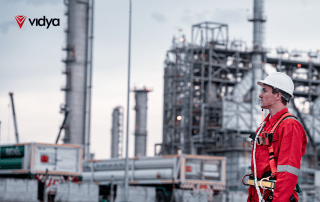
How Process Safety Strengthens Asset Integrity in the Energy Industry
In the energy industry, few things are as critical and as misunderstood as process safety. While personal safety focuses on preventing slips, trips, and falls, process safety is about ensuring the success of critical operational steps. In simple terms, process safety is the disciplined framework for preventing workflow disruptions that could lead to major incidents. These aren’t everyday events, but when they happen, the consequences are often devastating. That’s why process safety is so closely tied to Asset Integrity Management (AIM). If a facility is going to perform safely and operate as intended throughout its lifecycle, it must have strong, [...]

Benefits of Digital Twin in the process industry
A process industry is one that, from different raw materials, combines and transforms materials into new products. To carry out this process, thermal or chemical transformations usually occur, resulting in a final product that cannot be separated into its initial ingredients. For the finished product to be of high quality, the production process must be meticulously controlled step by step. Because of all the complexity in these industries, it is common to implement technologies that help control the operation, such as Digital Twin for exemple. In this article you will learn about the main problems that happen in the [...]