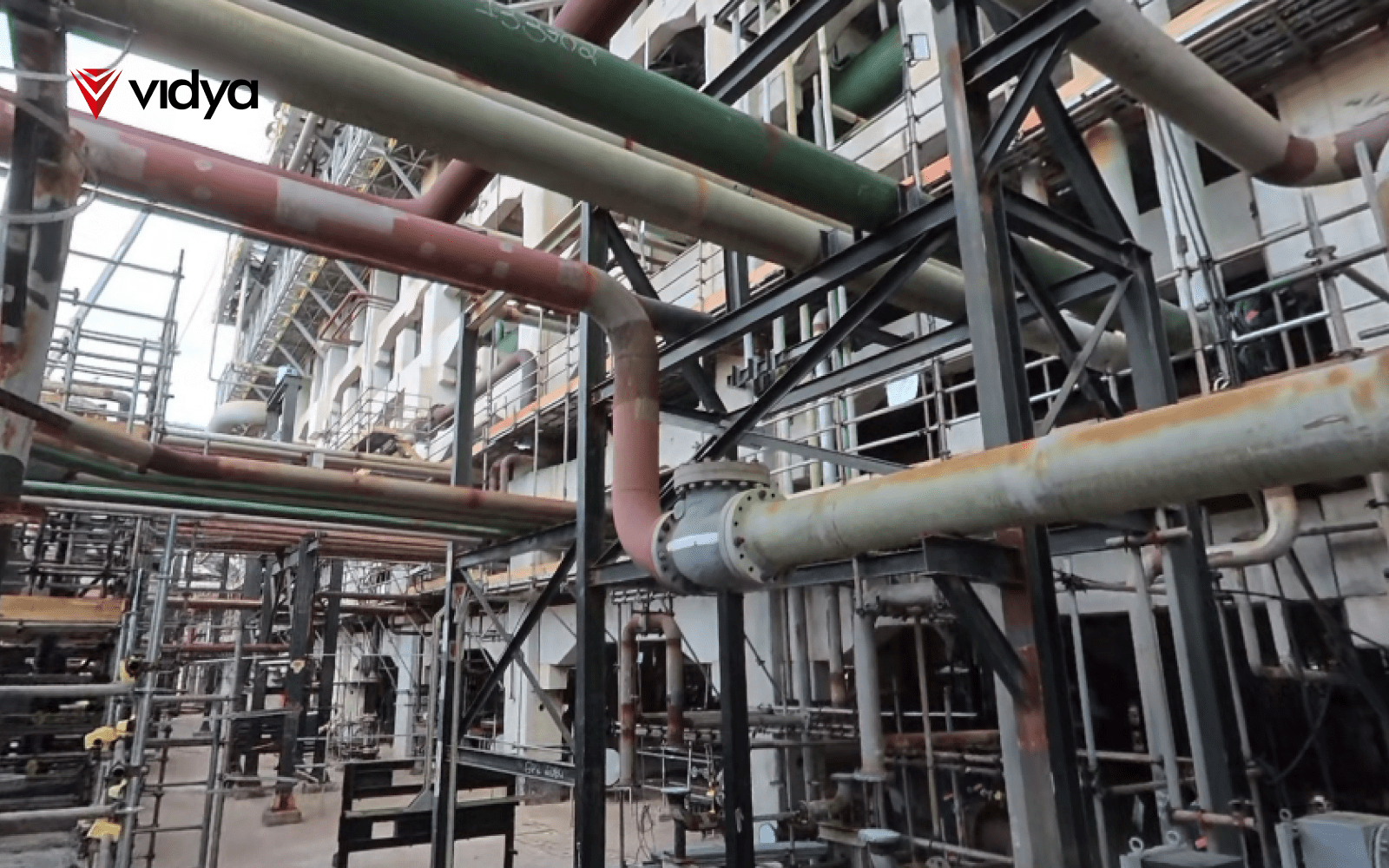
In industrial projects, delays, rework, and budget overruns are often attributed to factors such as labor shortages, logistical issues, scope changes, or execution challenges. While all of these factors have a real impact, there is a less visible cause that frequently lies at the root of many of these problems: the difference between what is documented in the design and what actually exists in the field.
This issue is especially relevant in brownfield projects, such as industrial plant expansions, revamps of existing units, refinery modernization programs, offshore platform interventions, and modifications to facilities that have accumulated decades of operational changes.
In these scenarios, the quality of engineering decisions depends directly on the quality of the available information. When the documentation used to plan a project does not accurately represent the actual condition of the asset, the entire project lifecycle begins operating on incorrect assumptions.
The consequences rarely appear at the beginning. More often, they become evident months later, during execution.
The Challenge of Operating Industrial Assets
Throughout the lifecycle of an industrial asset, countless modifications can occur.
Pipelines are modified. Equipment is replaced. Structures are reinforced. Instruments are relocated. Emergency adjustments are implemented to maintain production. Not all of these changes are documented with the level of detail required by engineering standards.
As the years pass, it becomes increasingly common for a growing gap to emerge between the available documentation and the facility’s actual physical configuration.
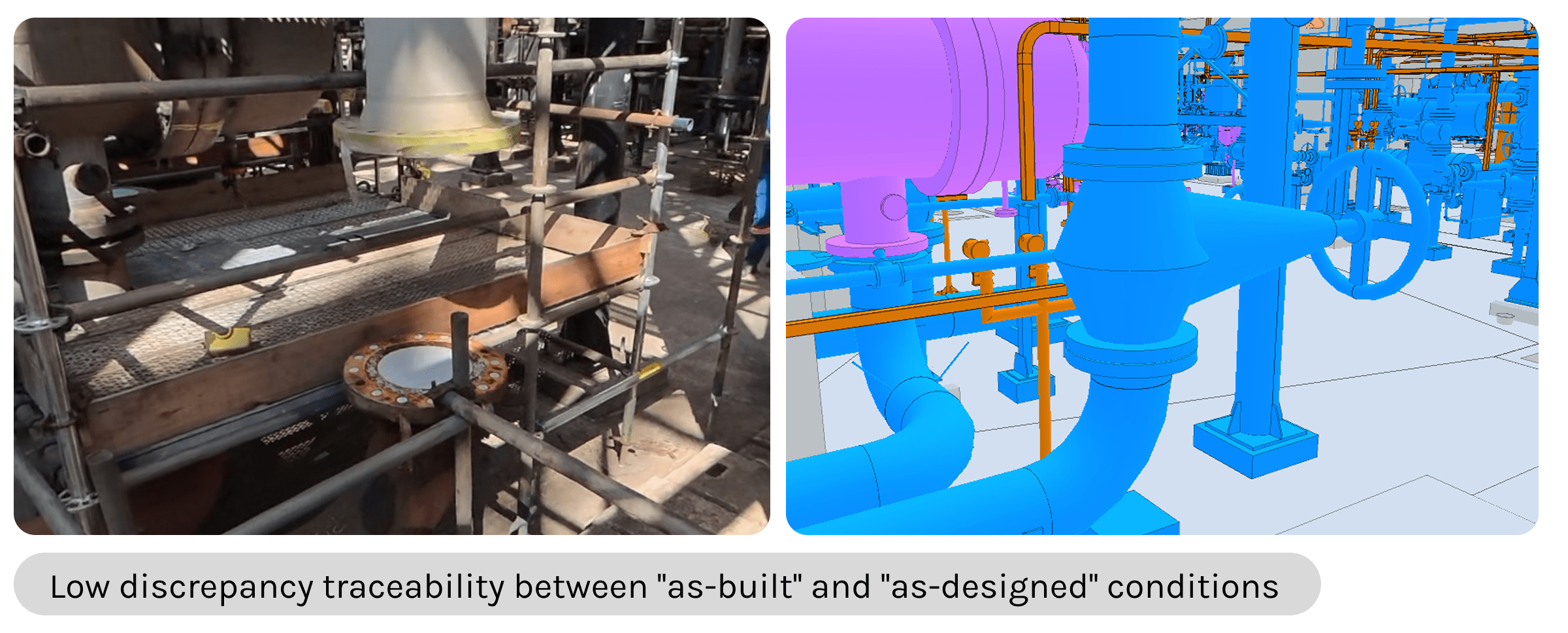
When a new project begins, engineering teams typically rely on existing documentation to develop studies, models, material take-offs, and project plans. The problem is that, in many cases, these documents represent a reality that no longer exists.
This disconnect creates a dangerous situation. The project appears correct in the digital environment but comes into conflict with physical reality as soon as execution begins.
When the Problem Appears Too Late
One of the most critical aspects of this issue is that discrepancies are rarely identified during the planning phase. On the contrary, they often remain invisible for months. Engineering progresses, material take-offs are generated, materials are specified, purchase orders are issued, schedules are approved, and construction teams are mobilized.
Only when construction activities reach the field do the first signs emerge that something is wrong. A pipeline occupies space that was assumed to be available. A structure interferes with a new piece of equipment. An access route included in the design simply does not exist. A support structure has dimensions that differ from those considered during engineering.
At that point, the problem ceases to be technical and becomes financial.
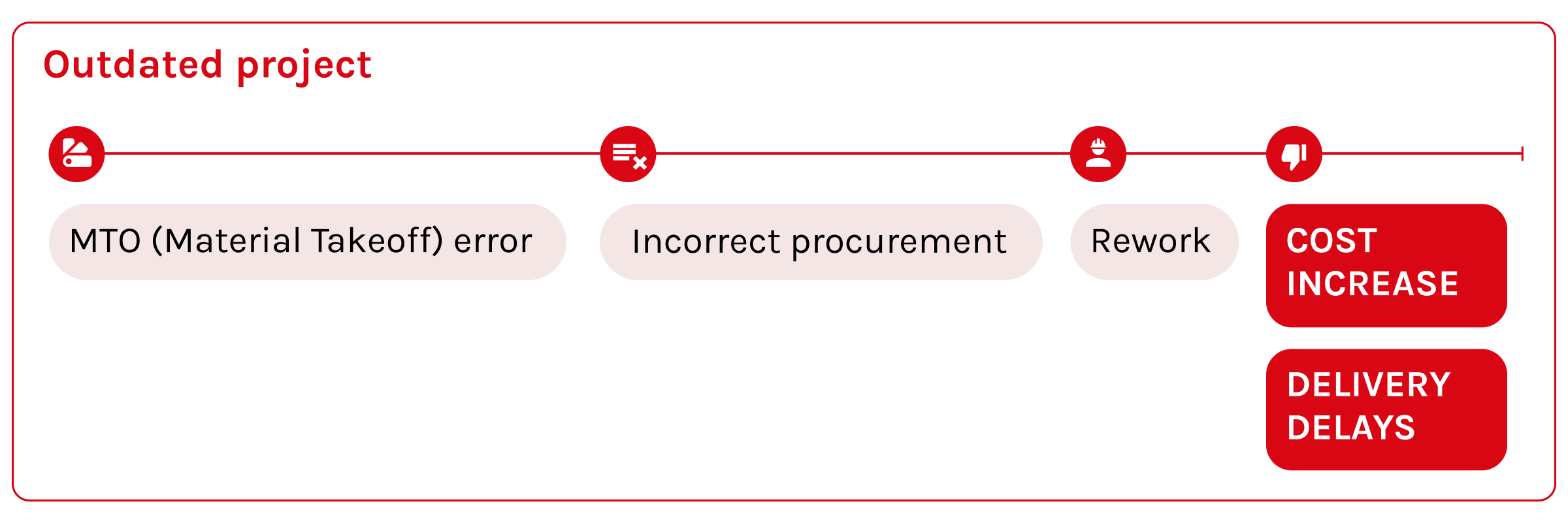
Every discrepancy discovered during execution creates a chain of impacts that may include engineering revisions, project replanning, additional procurement activities, temporary work stoppages, and schedule renegotiations.
The cost of correcting an incorrect assumption increases significantly the later it is discovered.
The Impact on Procurement and Materials
One of the least discussed consequences of discrepancies between design and field conditions is their impact on the material procurement process.
When material quantities are developed based on incomplete or outdated information, the risk of errors increases considerably.
Materials may be over-purchased. Components may be acquired with incorrect specifications. Critical items may be overlooked entirely.
In industrial projects, where certain equipment packages involve long manufacturing and delivery lead times, a single inconsistency can compromise weeks, or even months, of the project schedule.
Furthermore, the impact is not limited to material costs.
There are also costs associated with change management, document revisions, additional workforce mobilization, and the rework required to adapt the project to actual field conditions.
In many cases, the financial impact of a discrepancy far exceeds the cost that would have been required to identify it beforehand.
The Effect on Engineering Productivity
Another frequently underestimated aspect is the waste of intellectual effort.
Engineers and designers dedicate hundreds or even thousands of hours to developing technical solutions. When the input information does not accurately represent the actual condition of the asset, a significant portion of that work may need to be repeated.
This affects more than productivity. It also impacts the organization’s ability to deliver future projects.
Hours spent revising models, updating drawings, and correcting incompatibilities are hours that can no longer be devoted to higher-value activities.
In markets increasingly pressured by aggressive schedules and shrinking margins, this loss of efficiency can become a significant competitive disadvantage.
The Growing Challenge of Brownfield Projects
Historically, many engineering processes were developed for greenfield projects, where facilities are built virtually from scratch.
However, a large portion of current industrial investment is concentrated in existing assets. Refineries undergo modernization programs. Chemical plants receive expansions. Terminals are adapted for new operations. Offshore platforms undergo revitalization campaigns.
In this context, understanding the actual condition of the asset is no longer merely a preliminary activity. It becomes a critical factor in project success.
The complexity lies not only in what will be built. It also lies in what already exists.
And the older the asset, the greater the likelihood that discrepancies have accumulated over time.
Reducing Uncertainty Before Execution
Against this backdrop, there is a growing recognition that efficient industrial project management requires a more accurate understanding of physical reality before detailed engineering and construction activities begin. The objective is not simply to produce more complete documentation, but rather to reduce uncertainty.
The earlier discrepancies are identified, the smaller their impact on schedules, costs, and productivity.
For this reason, many organizations have invested in approaches that enable a more efficient comparison between the actual condition of assets and the available engineering documentation.
The use of digital models, three-dimensional surveys, and automated validation technologies has helped identify problems that previously would only have been discovered during execution.
Rather than identifying conflicts after teams and equipment have already been mobilized to the field, these solutions make it possible to detect inconsistencies during the planning and engineering phases.
For EPCs and industrial operators, this represents an opportunity to make decisions based on more reliable information, reduce rework, and improve project predictability. In an environment where schedule, cost, and productivity are decisive factors for competitiveness, reducing the gap between design and reality may be one of the most effective ways to prevent invisible problems from becoming tangible impacts during execution.
How Vidya Approaches This Challenge
Identifying discrepancies between design and field conditions before execution begins has always been a challenge in industrial projects. In complex environments such as refineries, offshore platforms, chemical plants, and large-scale infrastructure developments, critical decisions often depend on the quality of the information available about actual asset conditions.
Vidya specializes in transforming field data into engineering and operational intelligence, helping organizations make more informed decisions throughout the lifecycle of industrial assets and capital projects. Building on this experience, the company has adopted a different approach to this challenge: making physical reality validation more frequent, accessible, and scalable.
While technologies such as laser scanning provide a high level of accuracy, their large-scale adoption may be constrained by factors such as cost, processing time, and the need for specialized teams. Vidya’s approach complements this ecosystem by enabling engineering and construction teams to continuously validate field conditions through visual data, artificial intelligence, and engineering context.
Through the Digital Reality Match (DRM) application, images captured in the field using 360° cameras, or drones are correlated with the asset’s digital model. Based on this correlation, artificial intelligence algorithms perform an automated comparison between the as-designed condition and the as-built condition, identifying discrepancies that may impact planning, engineering, and execution.
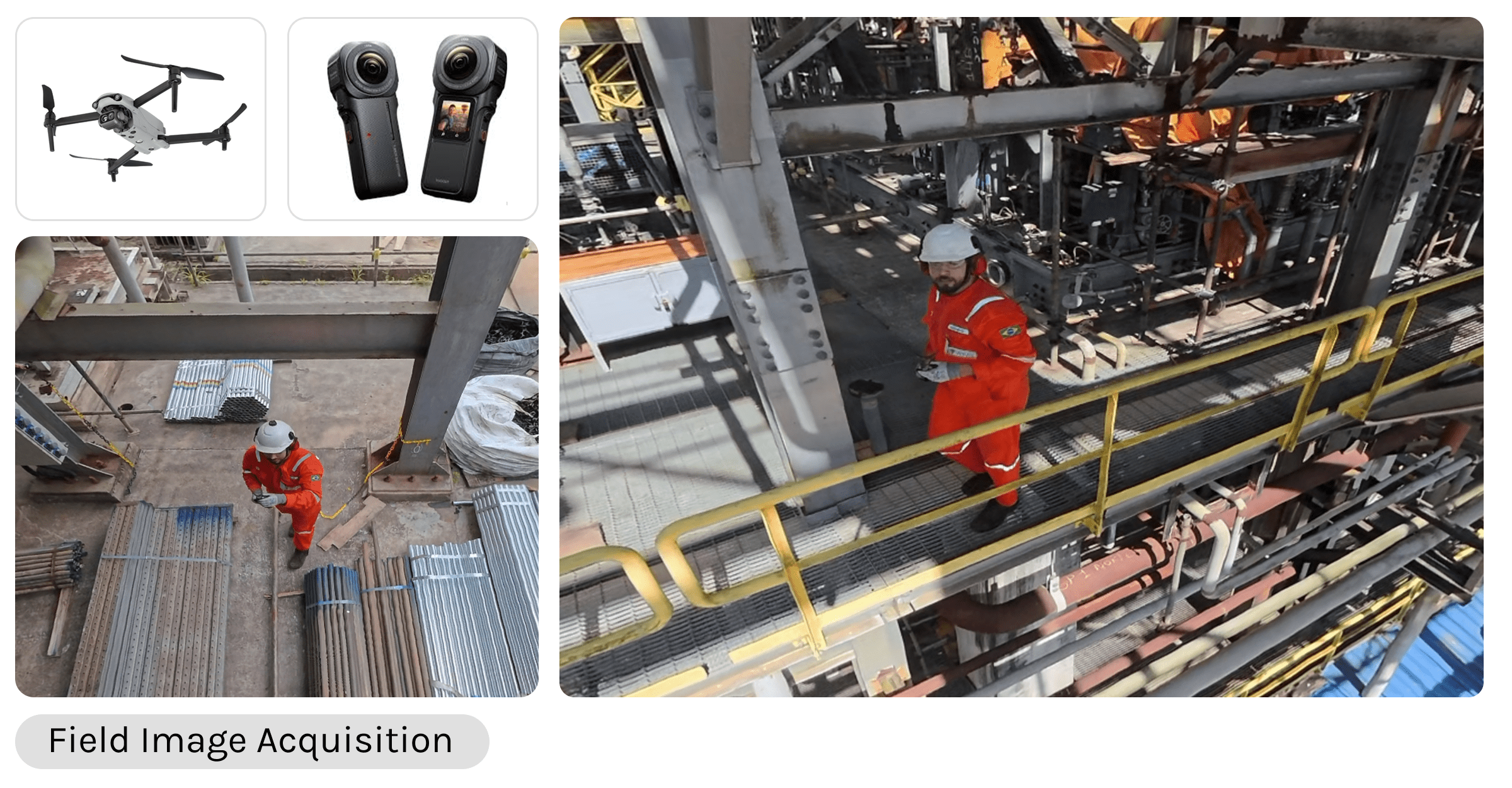
Rather than focusing exclusively on millimeter-level geometric deviations, the technology prioritizes discrepancies with operational relevance. Missing components, elements installed in unexpected locations, undocumented modifications, and inconsistencies between engineering documentation and physical reality can be identified before they become problems during construction.
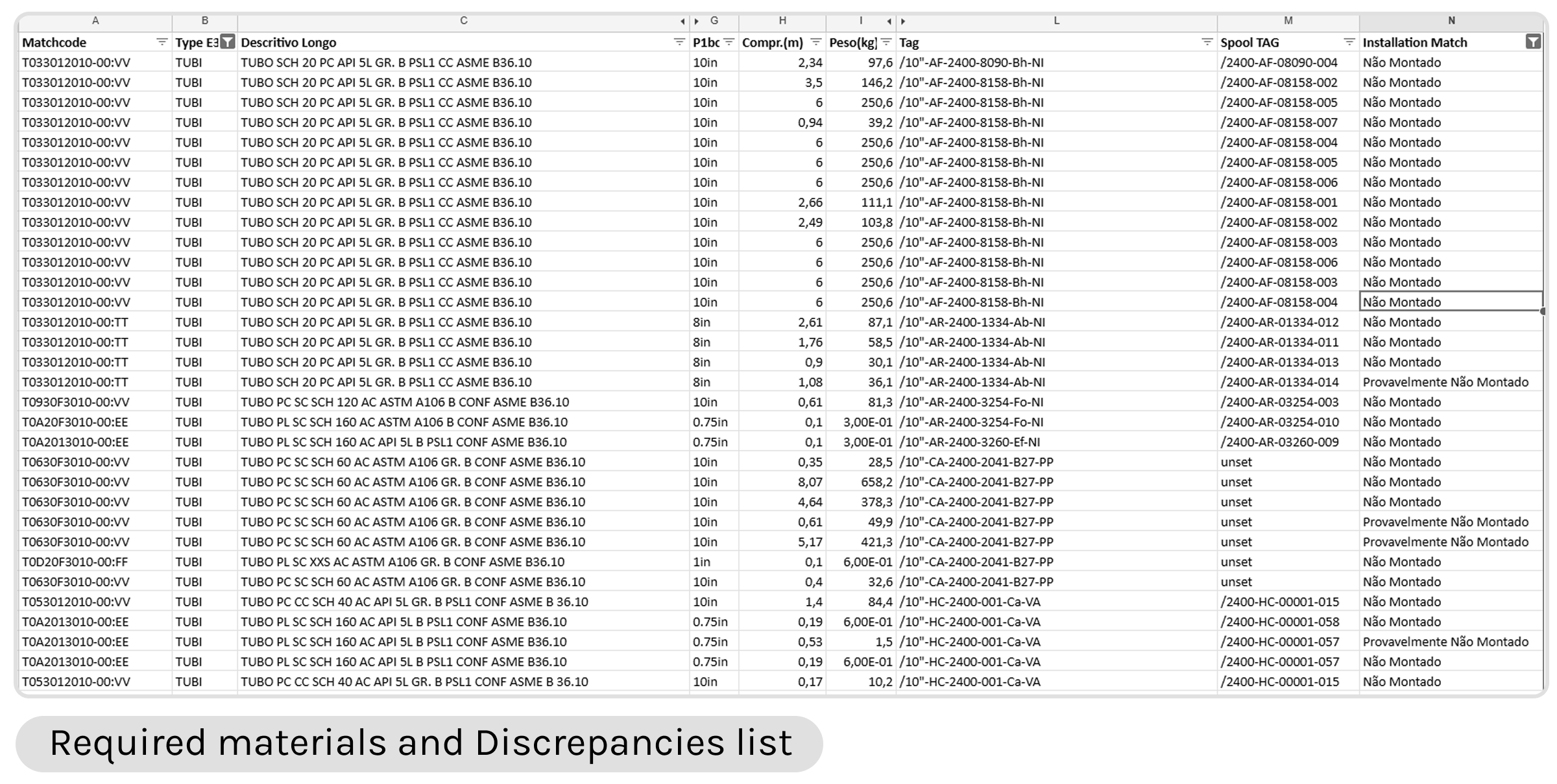
The result is a more reliable view of the asset’s actual condition before workforce mobilization, purchase order issuance, or the start of construction activities. The solution generates structured discrepancy lists, visual evidence associated with each occurrence, and model reliability maps, allowing engineering teams to focus their efforts on the areas of greatest criticality.
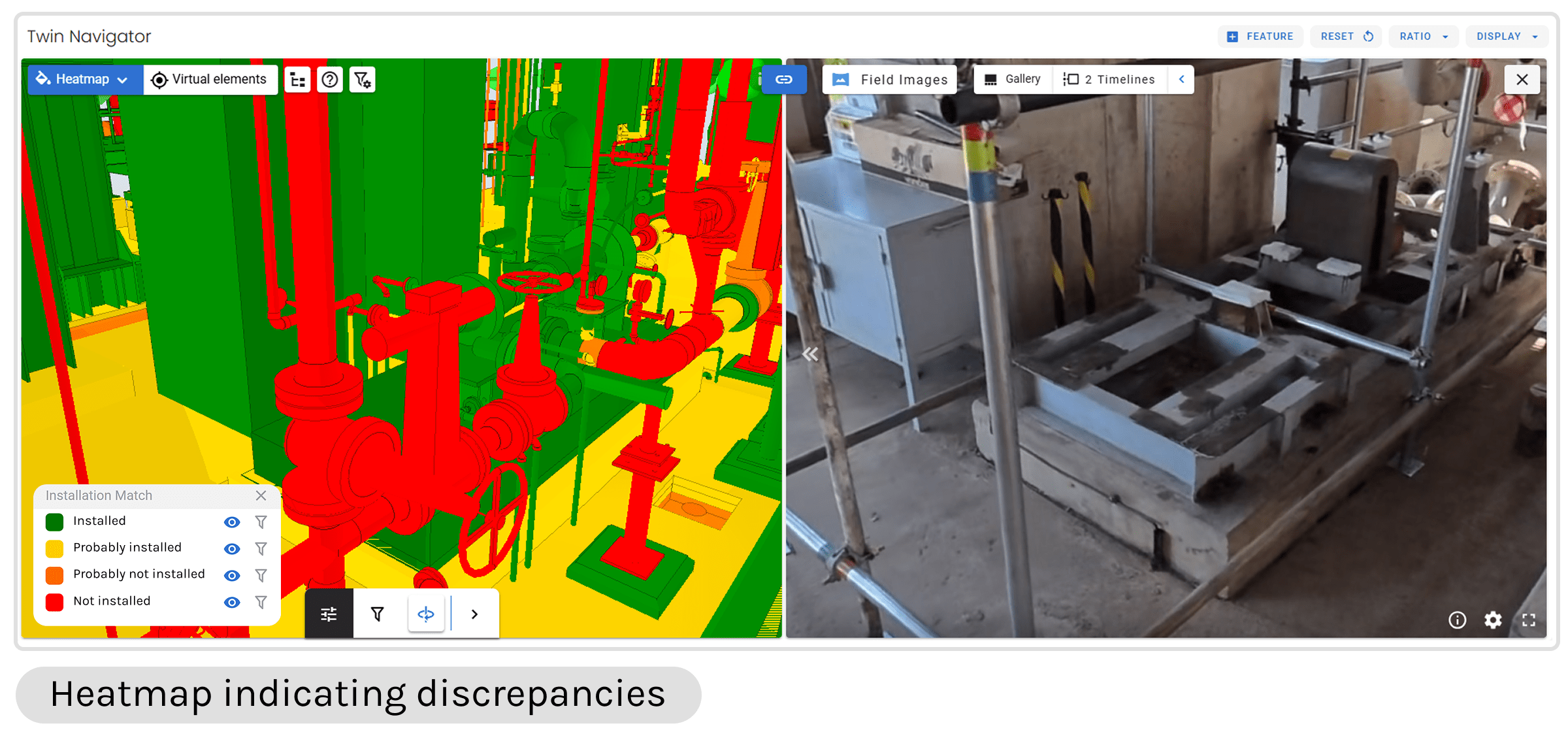
For EPCs and industrial operators, this creates an opportunity to track construction and project progress and reduce uncertainty during the planning and engineering phases. Instead of discovering incompatibilities during execution, when correction costs are significantly higher, teams can continuously validate the alignment between the design and actual field conditions.
In an environment where schedule, productivity, and predictability are critical factors for the success of any industrial project, the ability to keep digital models aligned with physical reality becomes more than a technological advantage. It becomes a fundamental element for decision-making and for delivering projects with lower risk.
Conclusion
For decades, industrial projects have been executed based on an implicit assumption: that the available documentation was sufficient to represent the reality of the asset. However, as industrial facilities become increasingly complex and accumulate successive modifications throughout their operational lives, this assumption becomes increasingly difficult to sustain.
The challenge is no longer simply about designing better or executing faster. It is about ensuring that decisions made throughout the project lifecycle are supported by reliable information from the very beginning.
In this context, the ability to continuously verify alignment between the physical environment and engineering models ceases to be a one-time activity and becomes an integral part of project governance. After all, the earlier a discrepancy is identified, the less likely it is to become a significant impact on cost, schedule, or productivity.
For EPCs and operators, the question is no longer whether these validations will be necessary. The real question is how early they will be incorporated into the decision-making process.
About the Author: Jorge Kawano