Support for Every Phase of EPC Project Execution
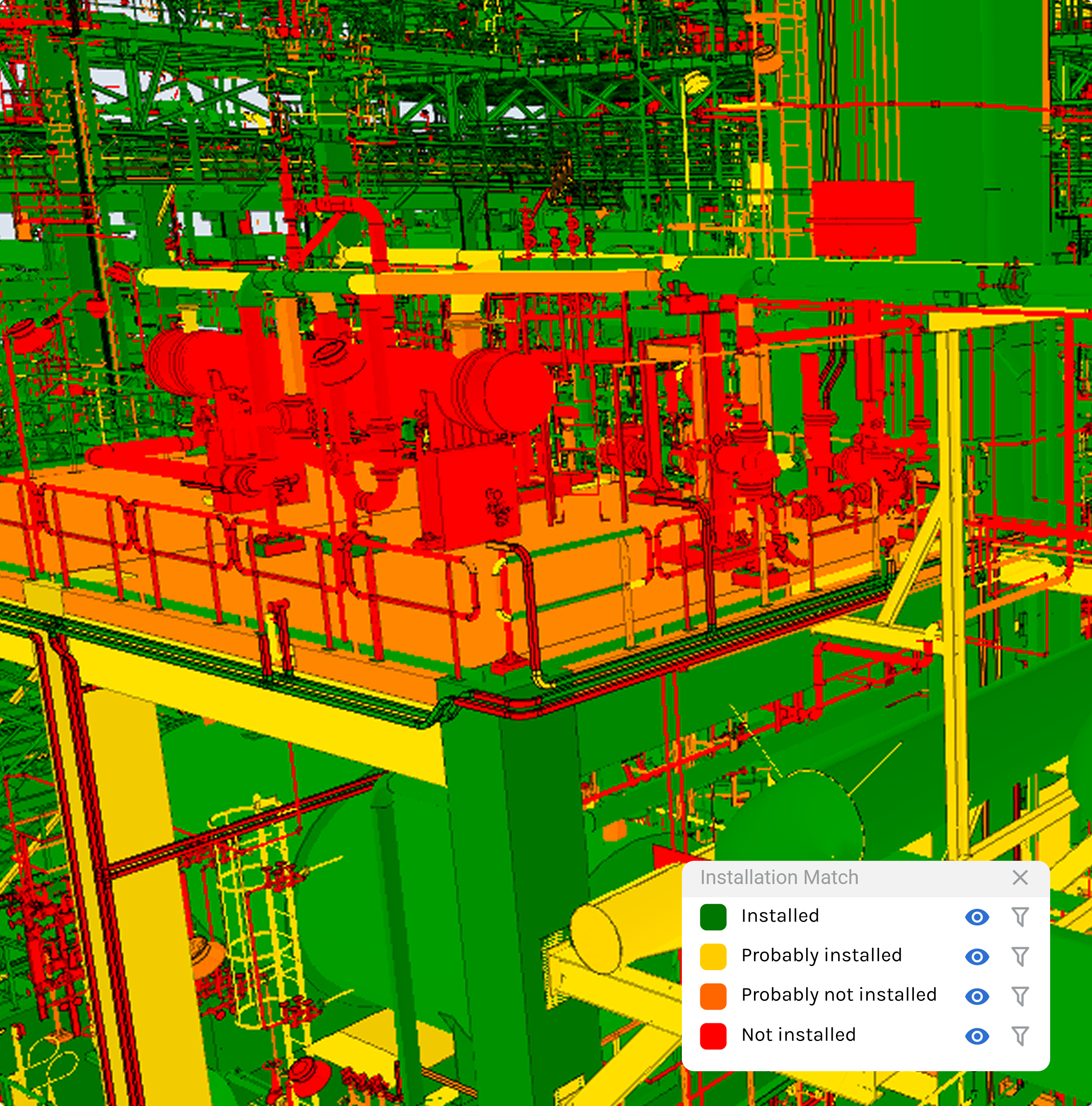
Engineering teams, EPCs and project owners need reliable visibility into field conditions throughout the project lifecycle. Vidya enables teams to continuously validate field conditions, monitor execution progress and compare planned versus actual status using real-world data captured directly from the site.
By connecting field reality with engineering information and project schedules, teams can improve productivity and make faster, evidence-based decisions during construction, commissioning and handover.
Support for Every Phase of EPC Project Execution
Engineering teams, EPCs and project owners need reliable visibility into field conditions throughout the project lifecycle. Yet, project decisions are often made based on disconnected information, manual inspections and limited understanding of actual site progress.
Vidya enables teams to continuously validate field conditions, monitor execution progress and compare planned versus actual status using real-world data captured directly from the site.
By connecting field reality with engineering information and project schedules, teams can reduce uncertainty, improve productivity and make faster, evidence-based decisions during construction, commissioning and handover.
Why industrial projects lose predictability
Industrial projects rarely fail because of engineering alone. Most delays, budget overruns and rework originate from incomplete understanding of existing conditions. When field reality differs from project assumptions, the consequences quickly cascade across engineering, procurement and construction activities.
Why industrial projects lose predictability
Industrial projects rarely fail because of engineering alone. Most delays, budget overruns and rework originate from incomplete understanding of existing conditions. When field reality differs from project assumptions, the consequences quickly cascade across engineering, procurement and construction activities.
How Vidya Supports EPC Projects Across the Asset Lifecycle
Each phase of an EPC project introduces different execution challenges, from planning and construction through commissioning and operations. The sections below outline how Vidya supports these critical stages.
How Vidya Supports EPC Projects Across the Asset Lifecycle
Each phase of an EPC project introduces different execution challenges, from planning and construction through commissioning and operations. The sections below outline how Vidya supports these critical stages.





How does it works?

Reality capture
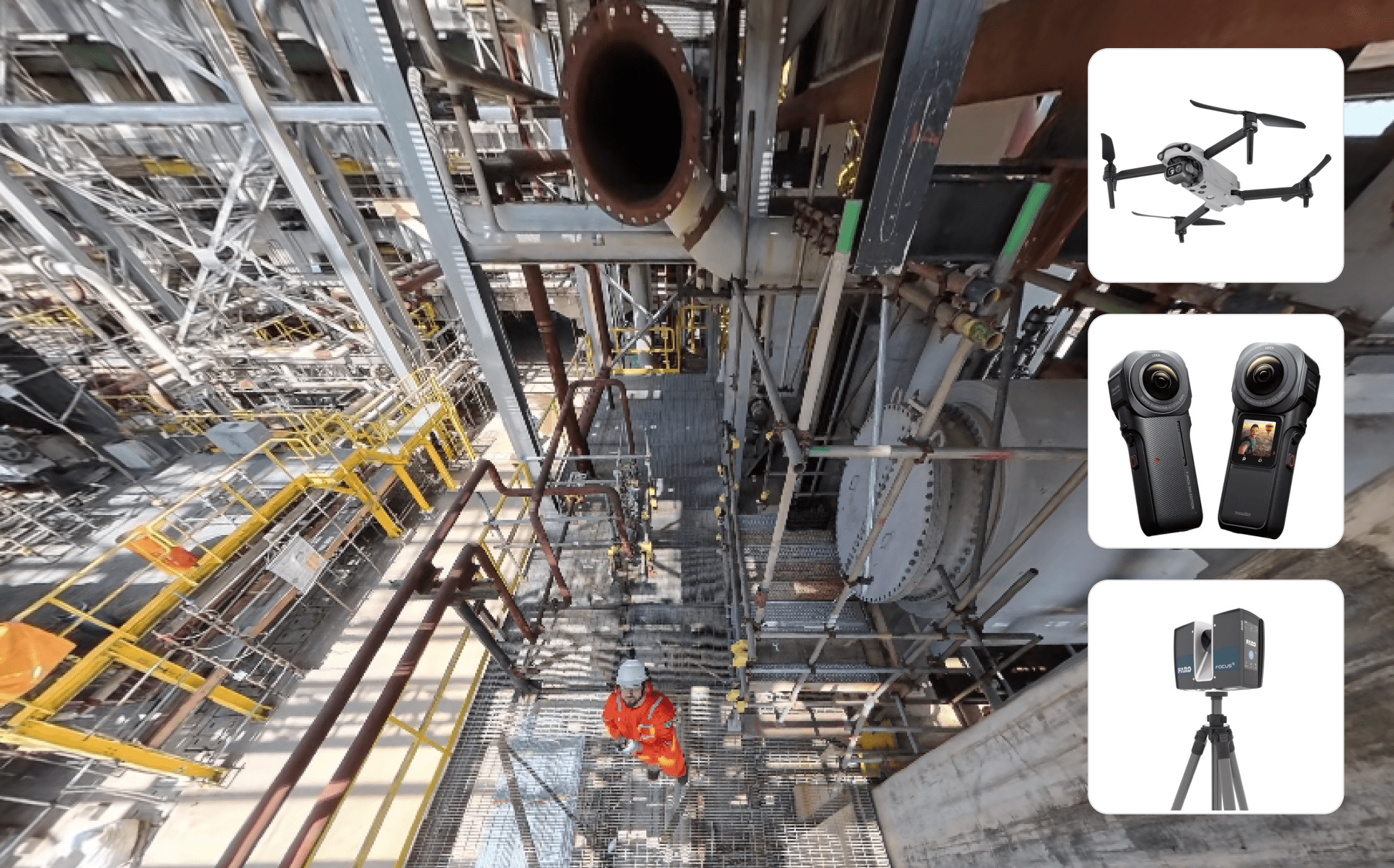
The process begins with reality capture. Field conditions are documented using drone imagery or 360° cameras, creating a visual representation of the project environment without requiring extensive surveying activities.
This approach enables rapid site documentation while maintaining the contextual information needed to understand the physical conditions of the asset.
DRM Processing
Once captured, the imagery is processed by DRM. Using computer vision, artificial intelligence and spatial correlation techniques, the platform analyzes field conditions and compares them against engineering references and expected project configurations.
DRM automatically identifies inconsistencies that may affect engineering, procurement or construction activities.
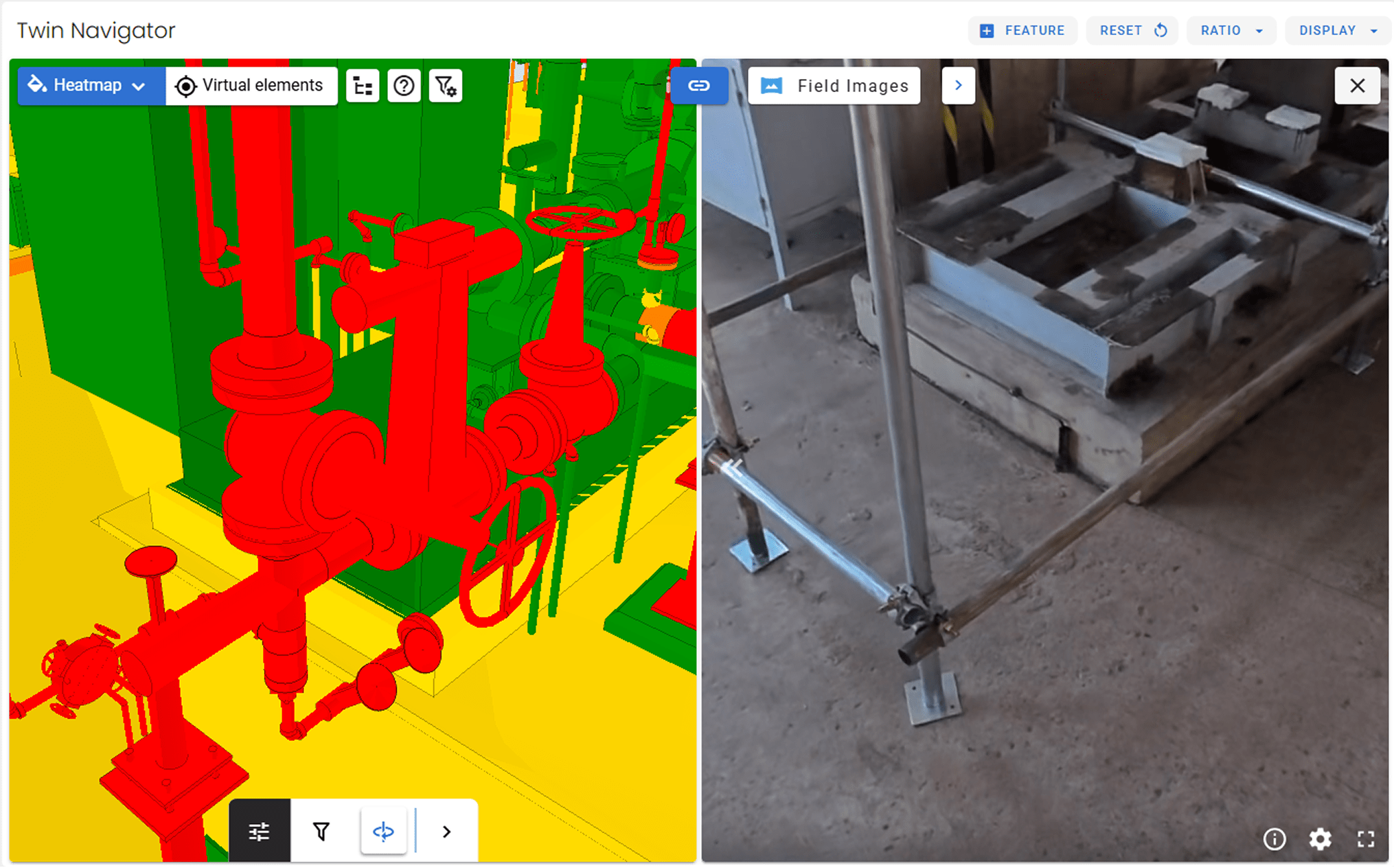
Detect Issues Early in the Field
The result is a structured view of discrepancies and project risks that would otherwise remain hidden within large volumes of visual data.
Teams gain visibility into areas requiring attention before they become costly engineering revisions, procurement changes or construction delays.
Outputs Generated by DRM
How does it works?
Reality capture
The process begins with reality capture. Field conditions are documented using drone imagery or 360° cameras, creating a visual representation of the project environment without requiring extensive surveying activities.
This approach enables rapid site documentation while maintaining the contextual information needed to understand the physical conditions of the asset.
DRM Processing
Once captured, the imagery is processed by DRM. Using computer vision, artificial intelligence and spatial correlation techniques, the platform analyzes field conditions and compares them against engineering references and expected project configurations.
DRM automatically identifies inconsistencies that may affect engineering, procurement or construction activities.
Detect Issues Early in the Field
The result is a structured view of discrepancies and project risks that would otherwise remain hidden within large volumes of visual data.
Teams gain visibility into areas requiring attention before they become costly engineering revisions, procurement changes or construction delays.
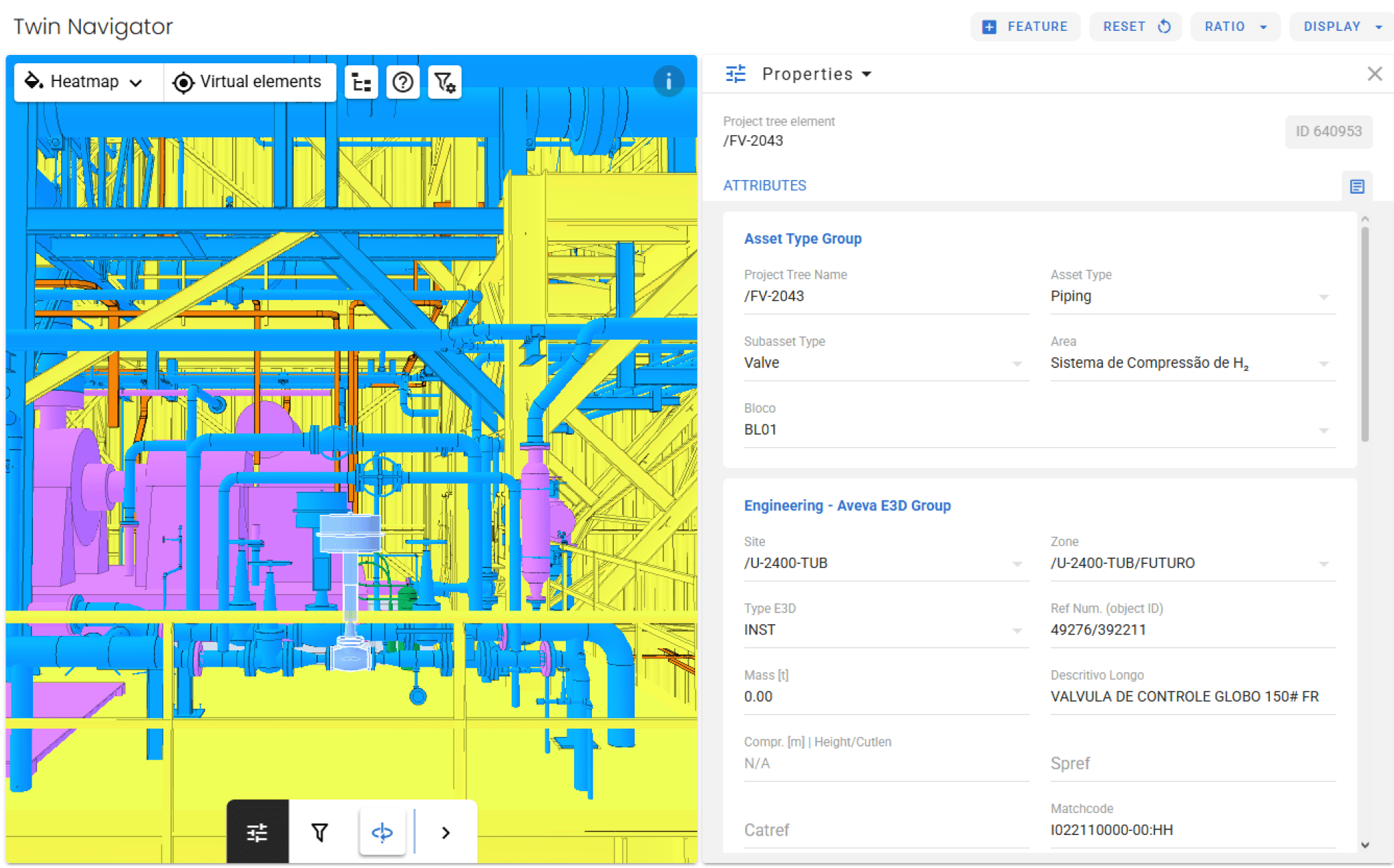
Outputs Generated by DRM
How does it work?

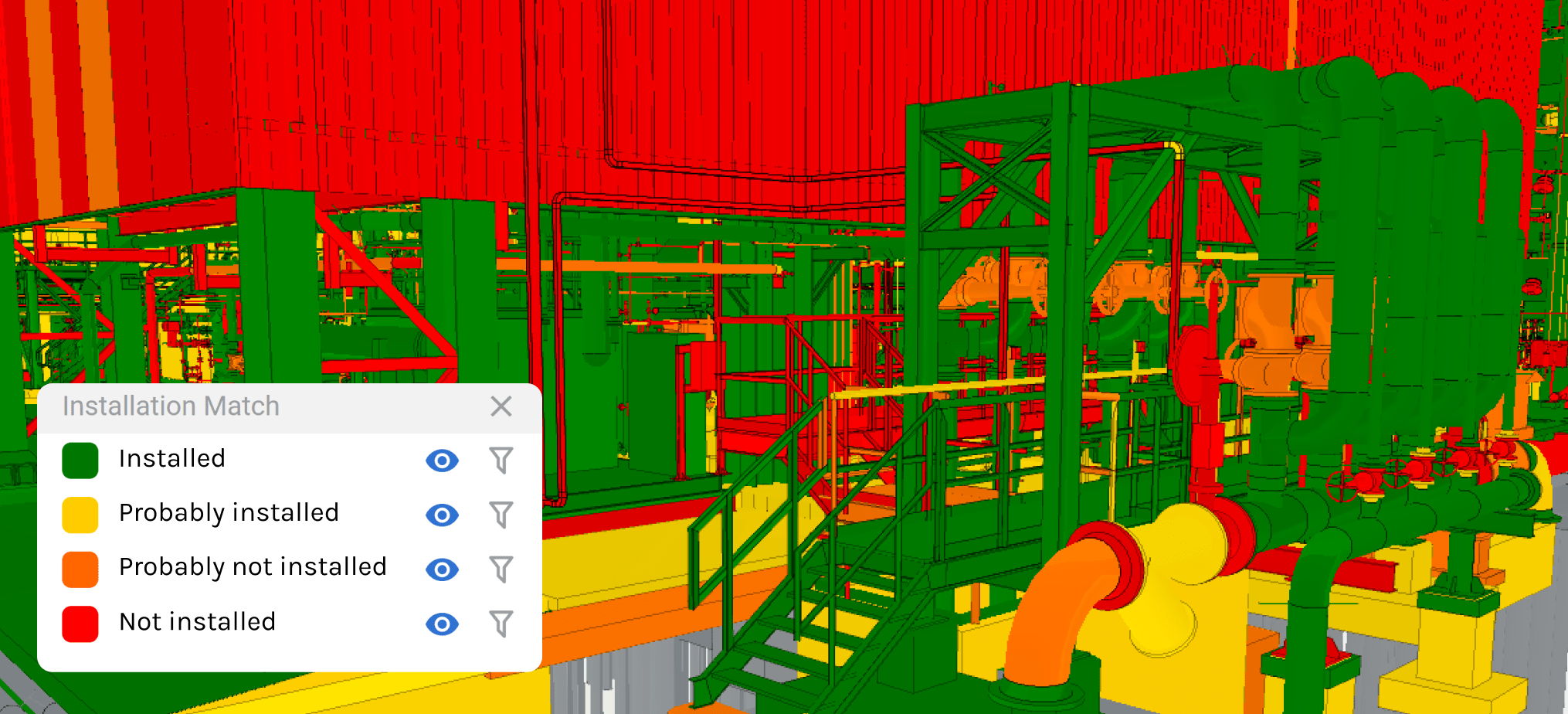
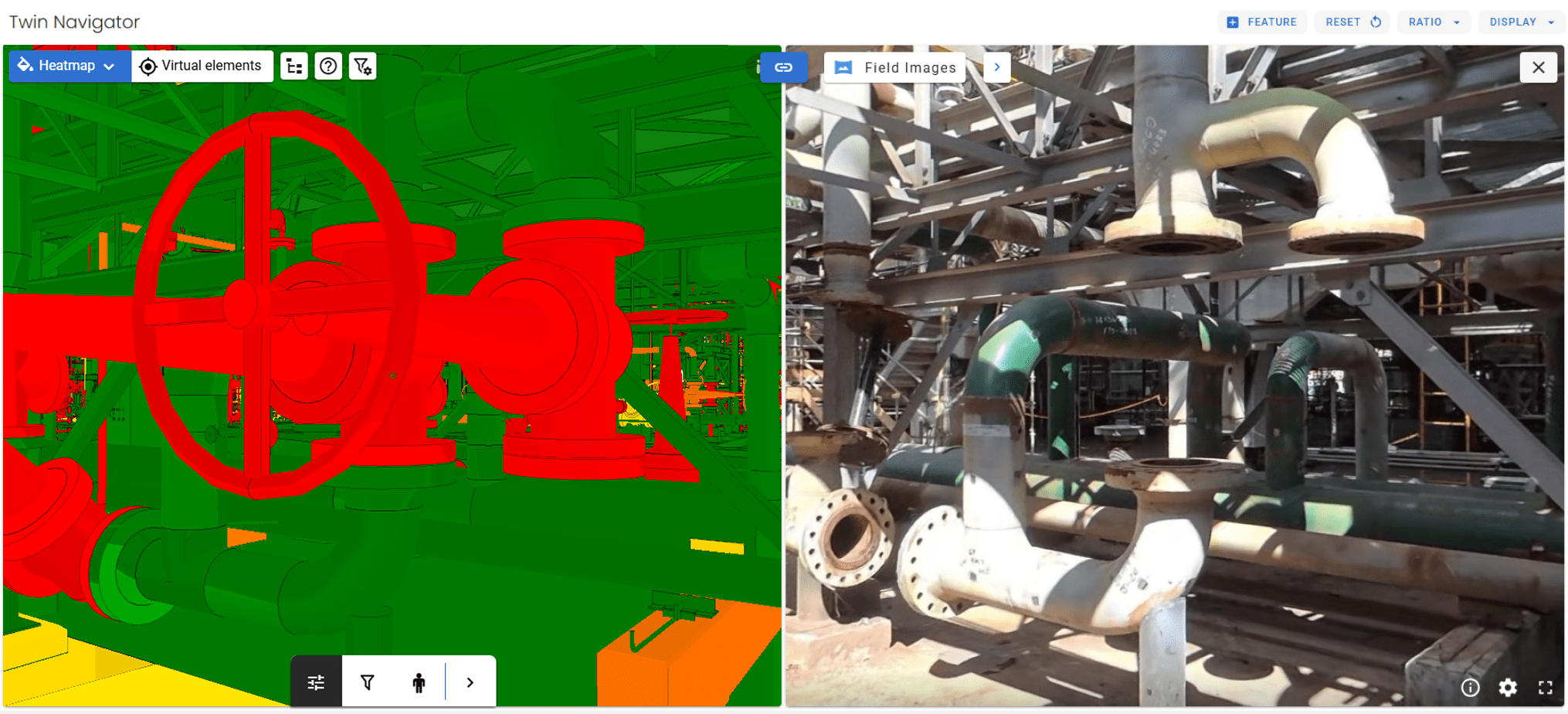
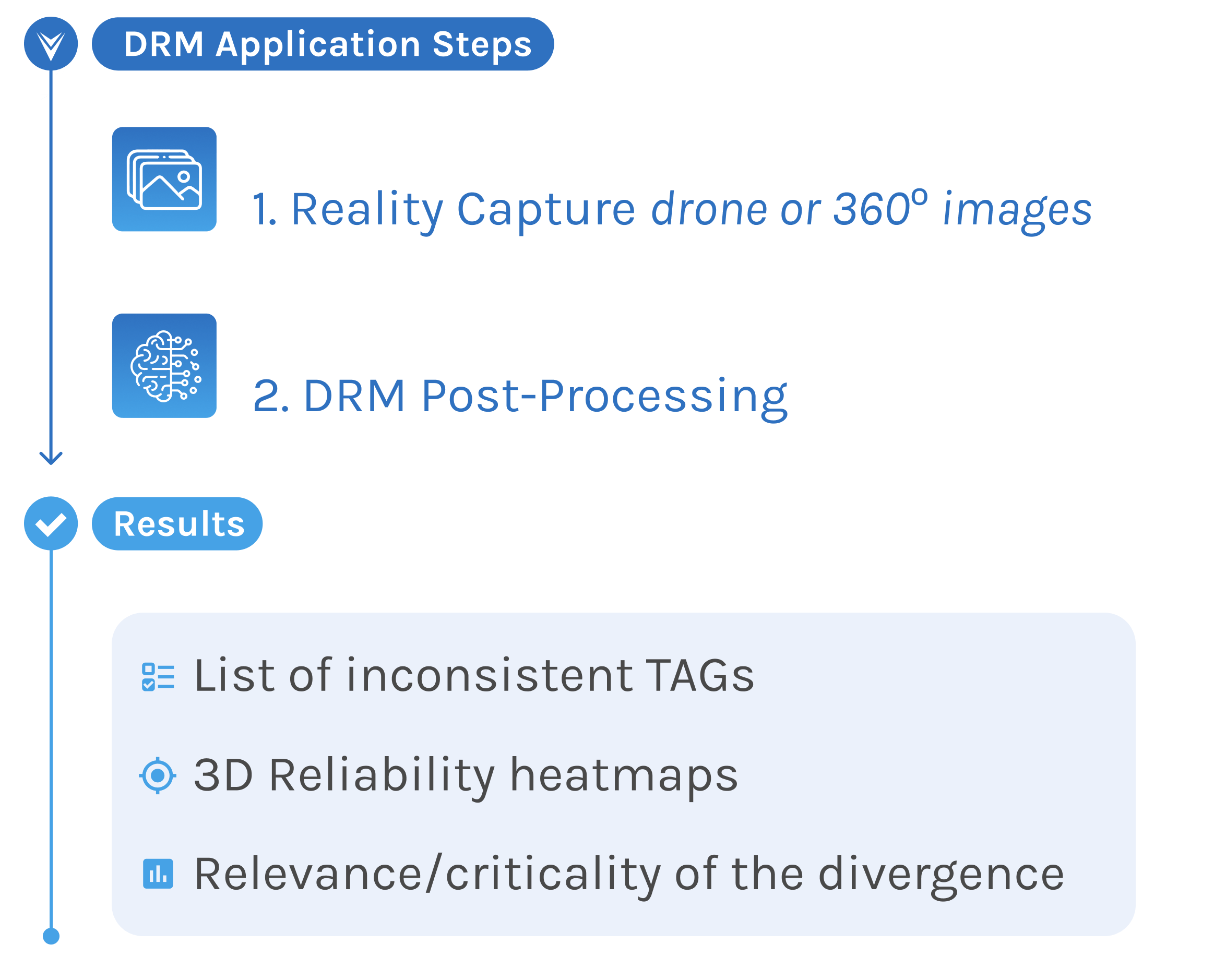
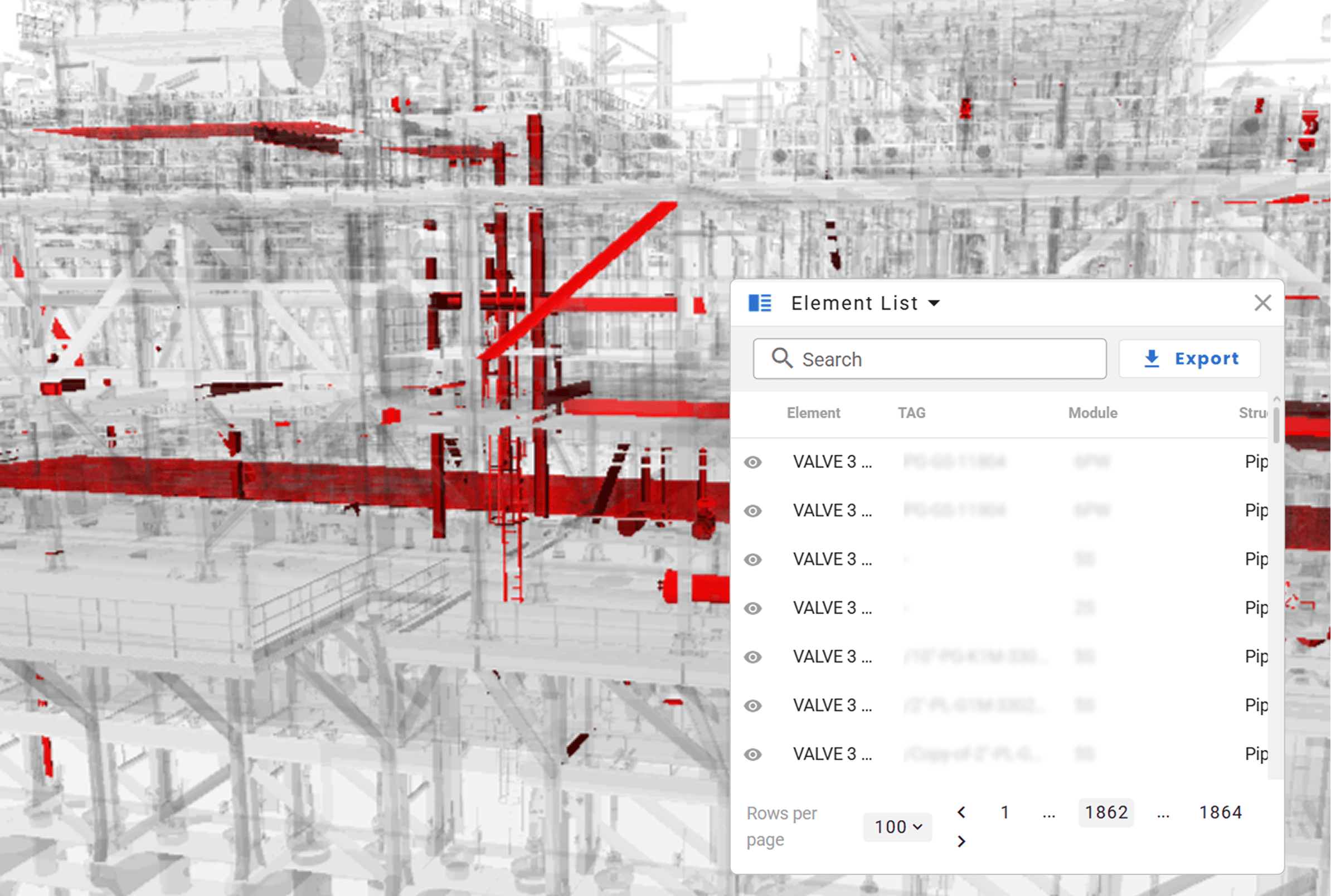
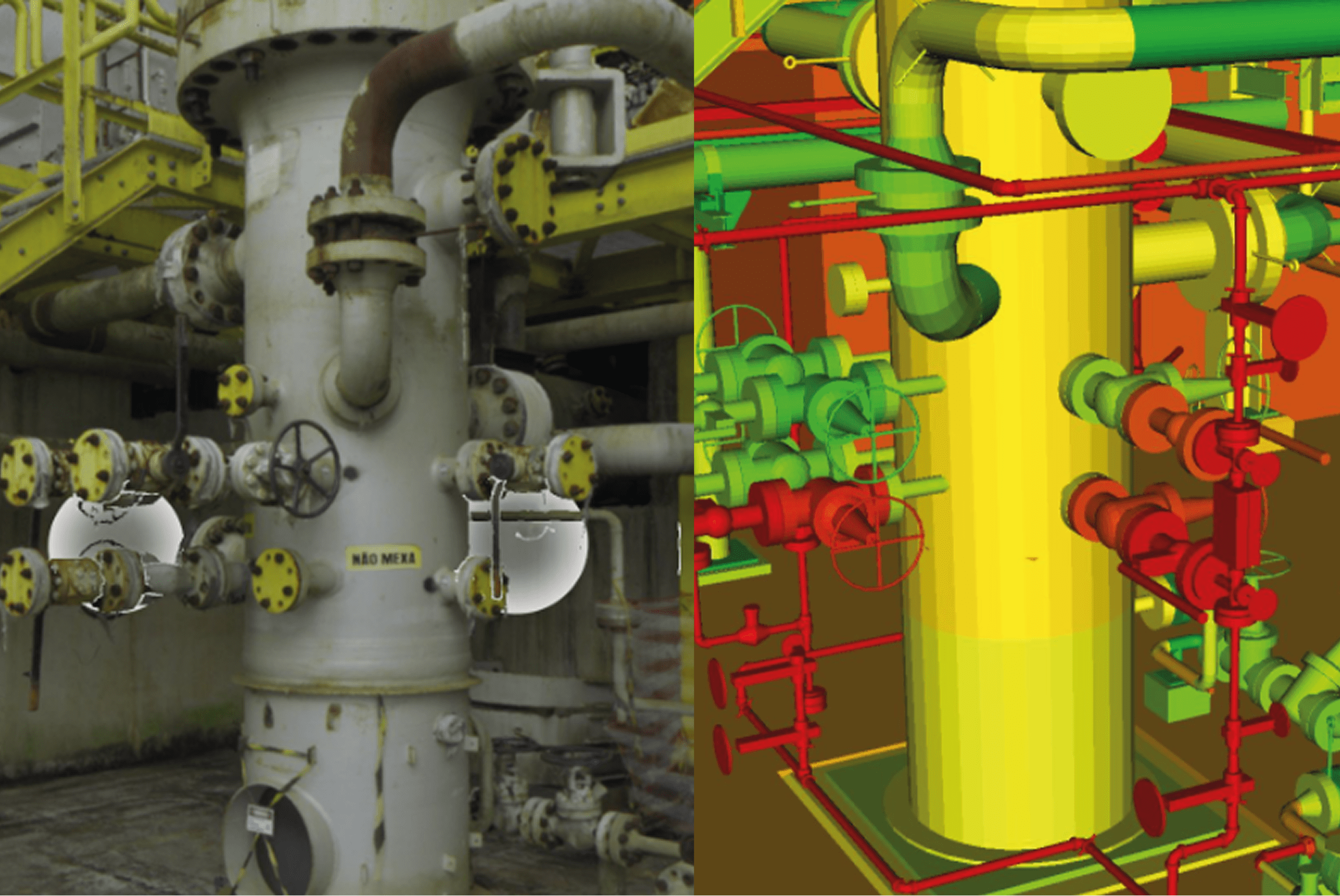
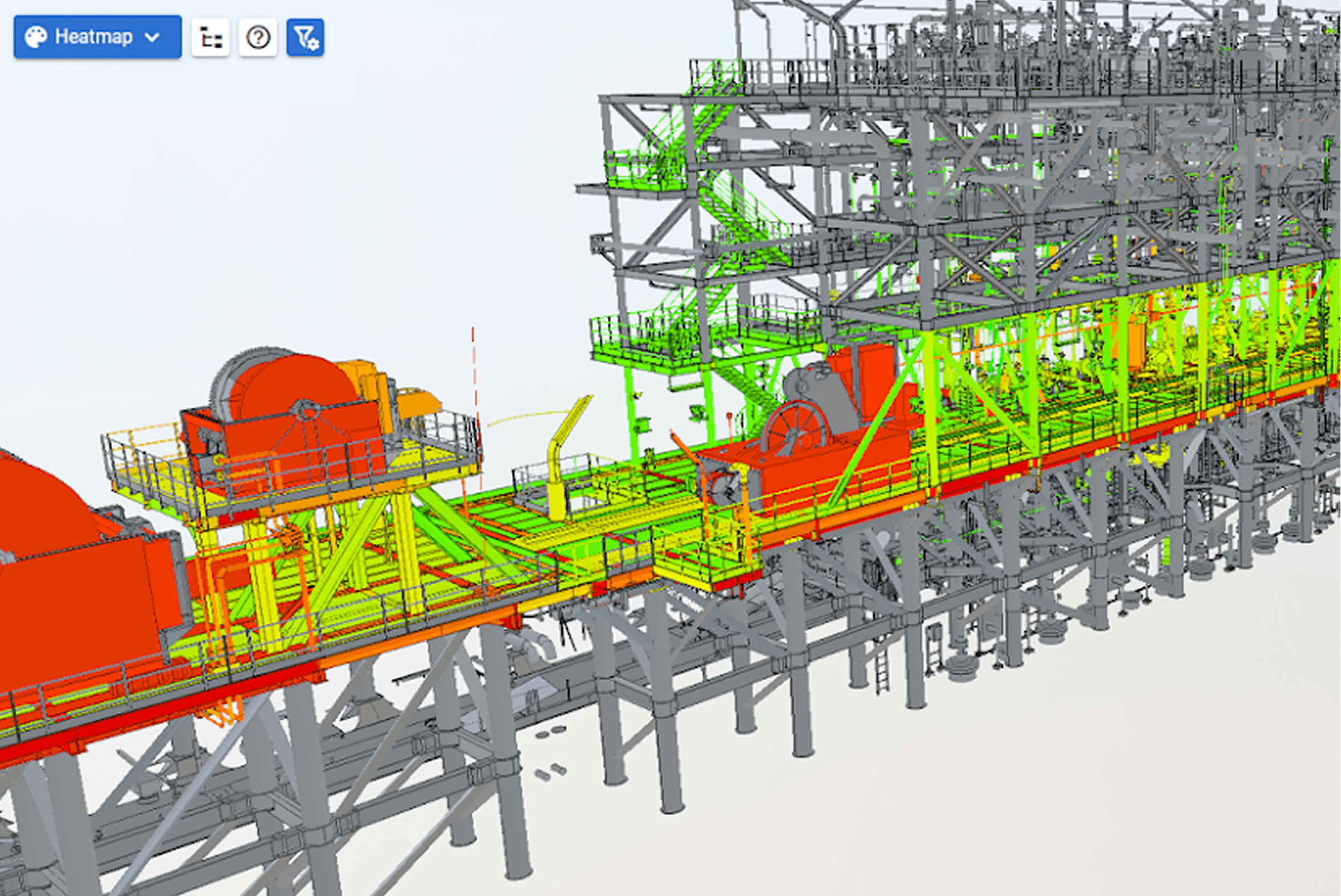
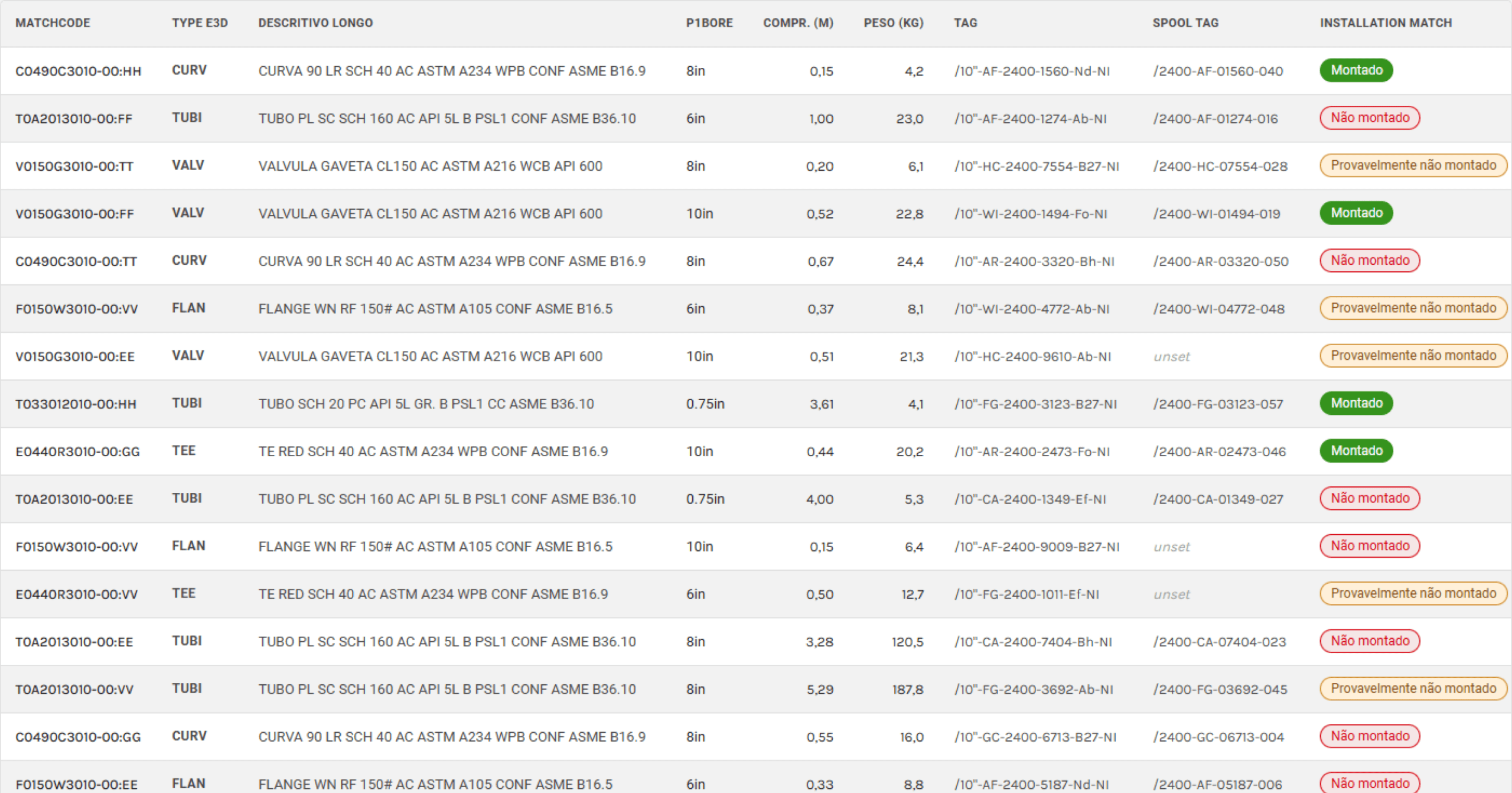
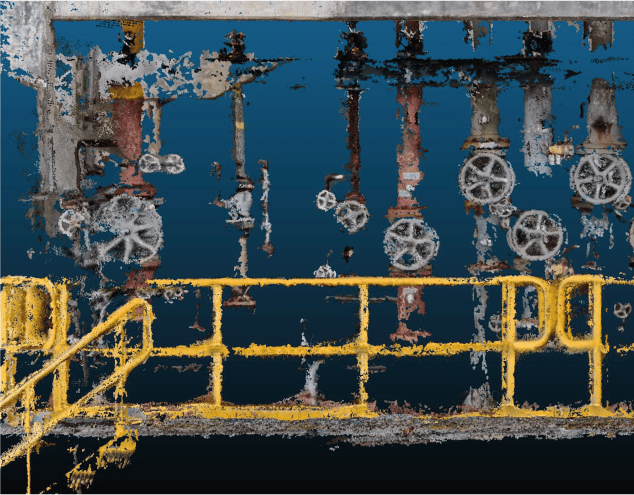
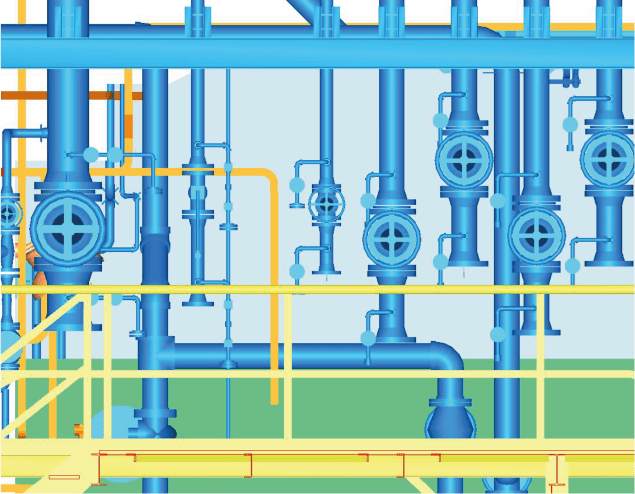
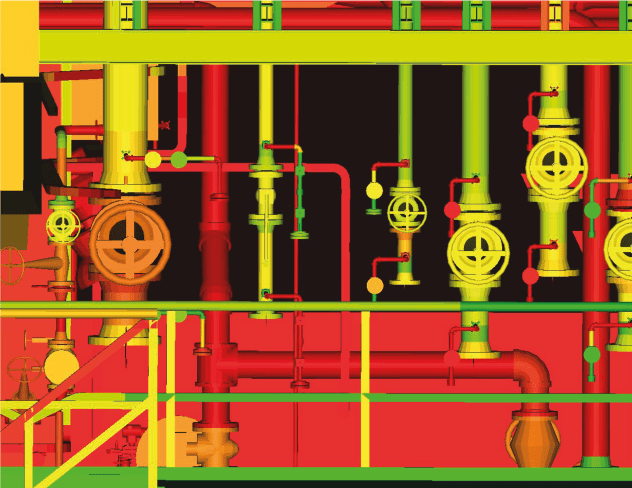
The first step of the DRM workflow is conducting a reality capture campaign using 360° cameras or drone imagery to document current field conditions. The collected images (as-is) are then processed and spatially aligned with the facility’s BIM model (as-designed). Using AI-assisted analysis, the system automatically identifies inconsistencies between the designed and actual conditions, generating a structured list of divergent TAGs, 3D reliability heatmaps, and a criticality assessment of each detected deviation.
Design vs. Field Validation
Identify discrepancies between engineering models and actual field conditions before execution.
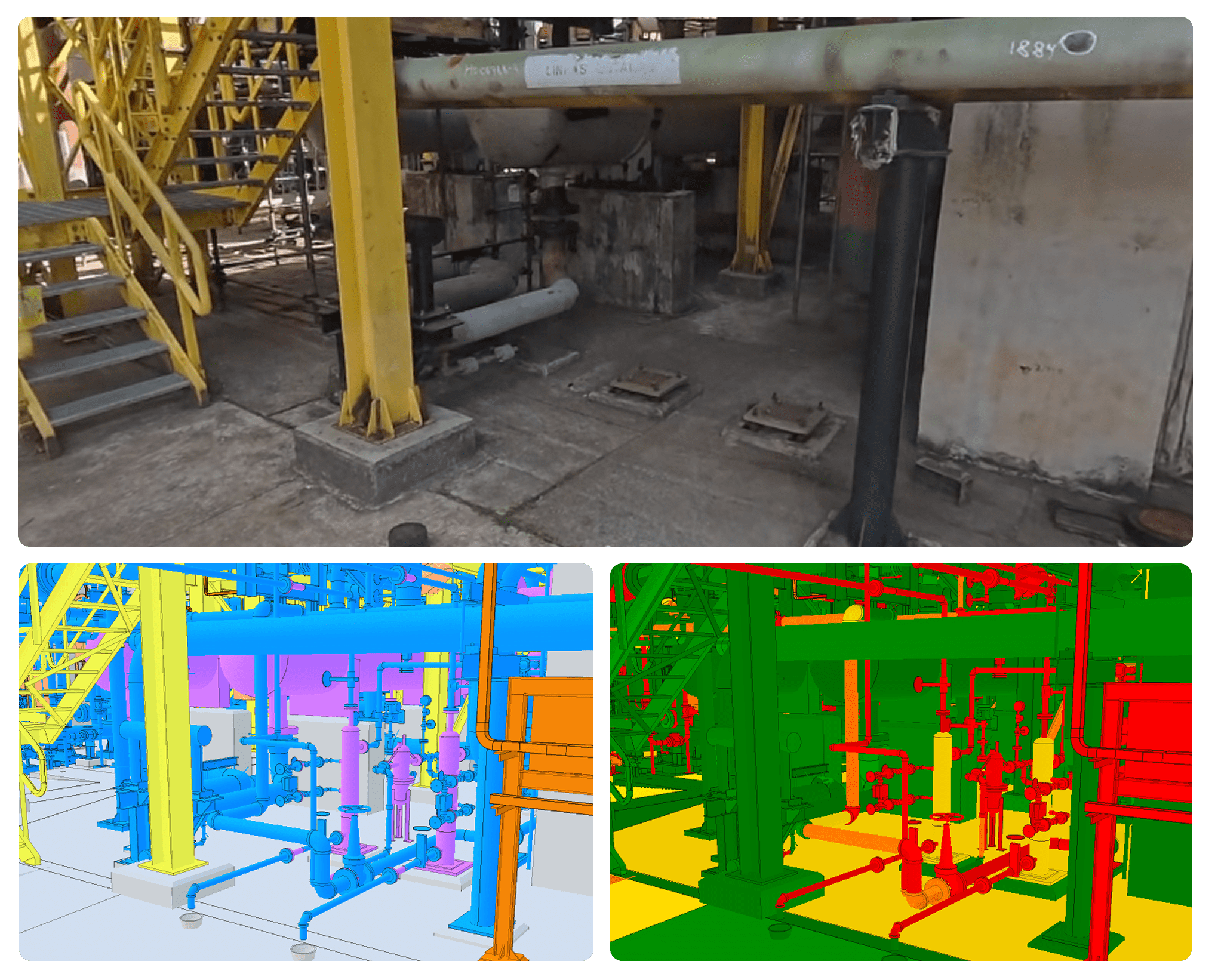
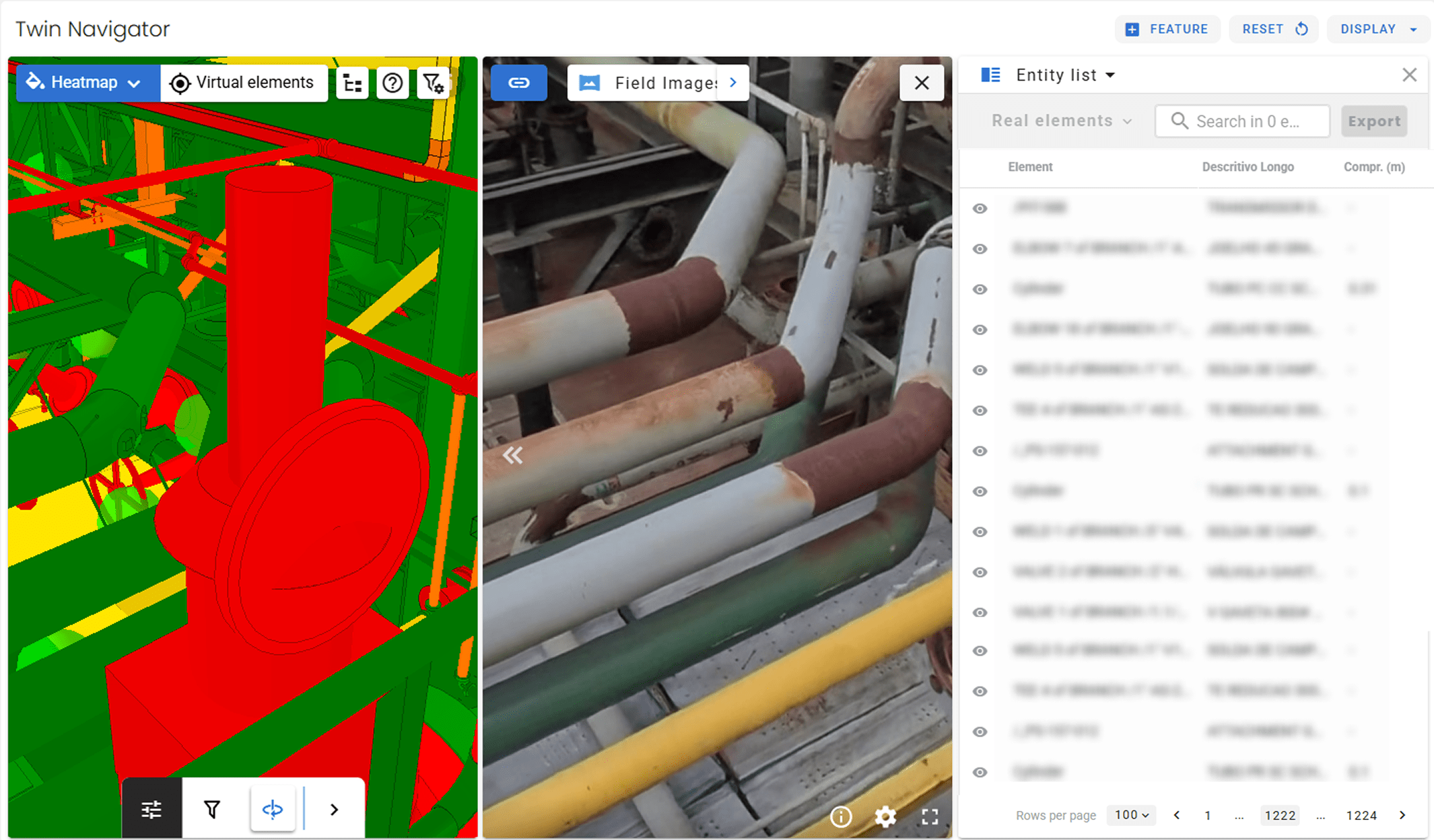
Construction Reality Mapping
Create a contextual visual layer connecting field captures to project assets.
Material Take-Off Reliability
Improve confidence in material quantities by validating existing conditions before procurement.
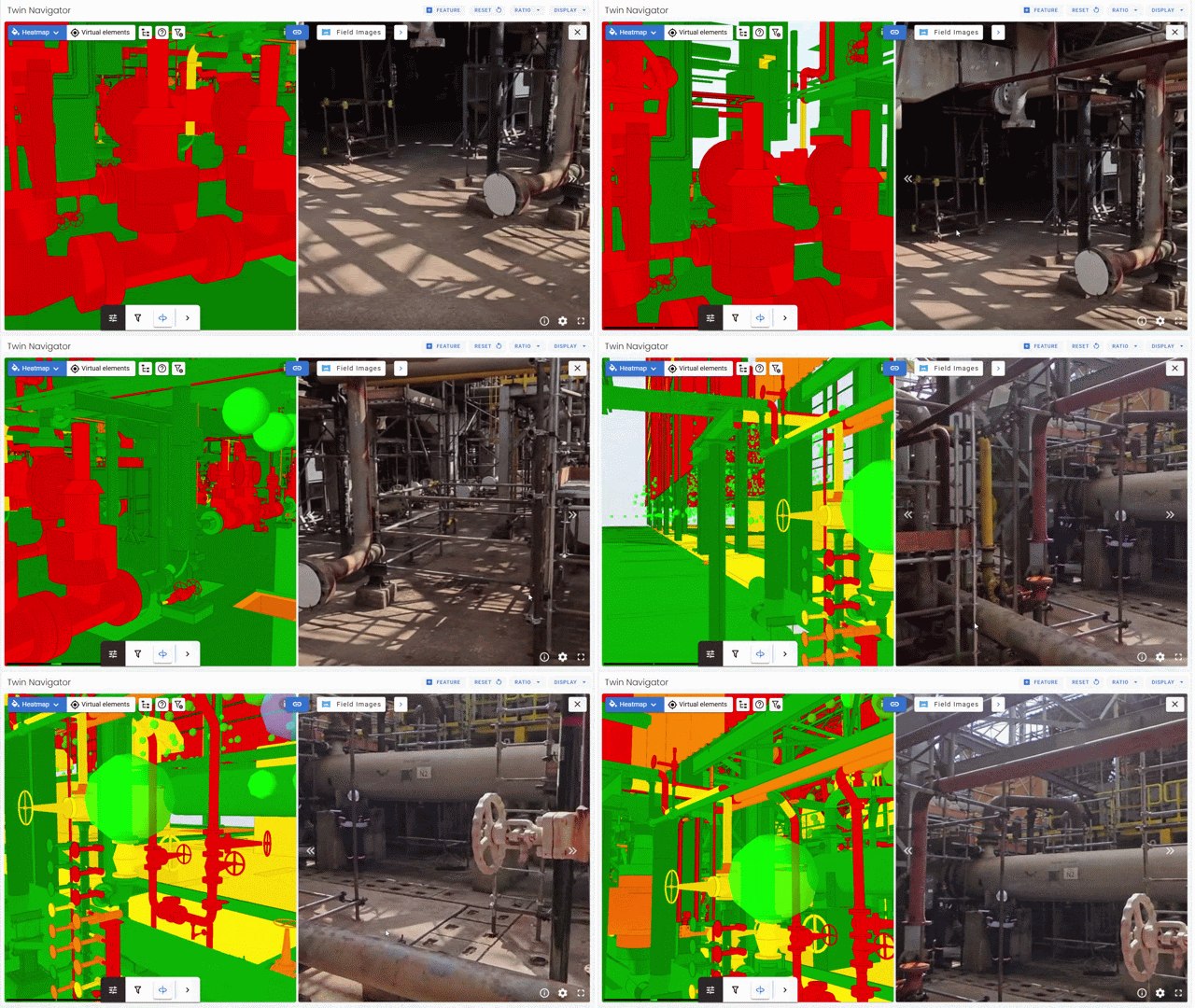
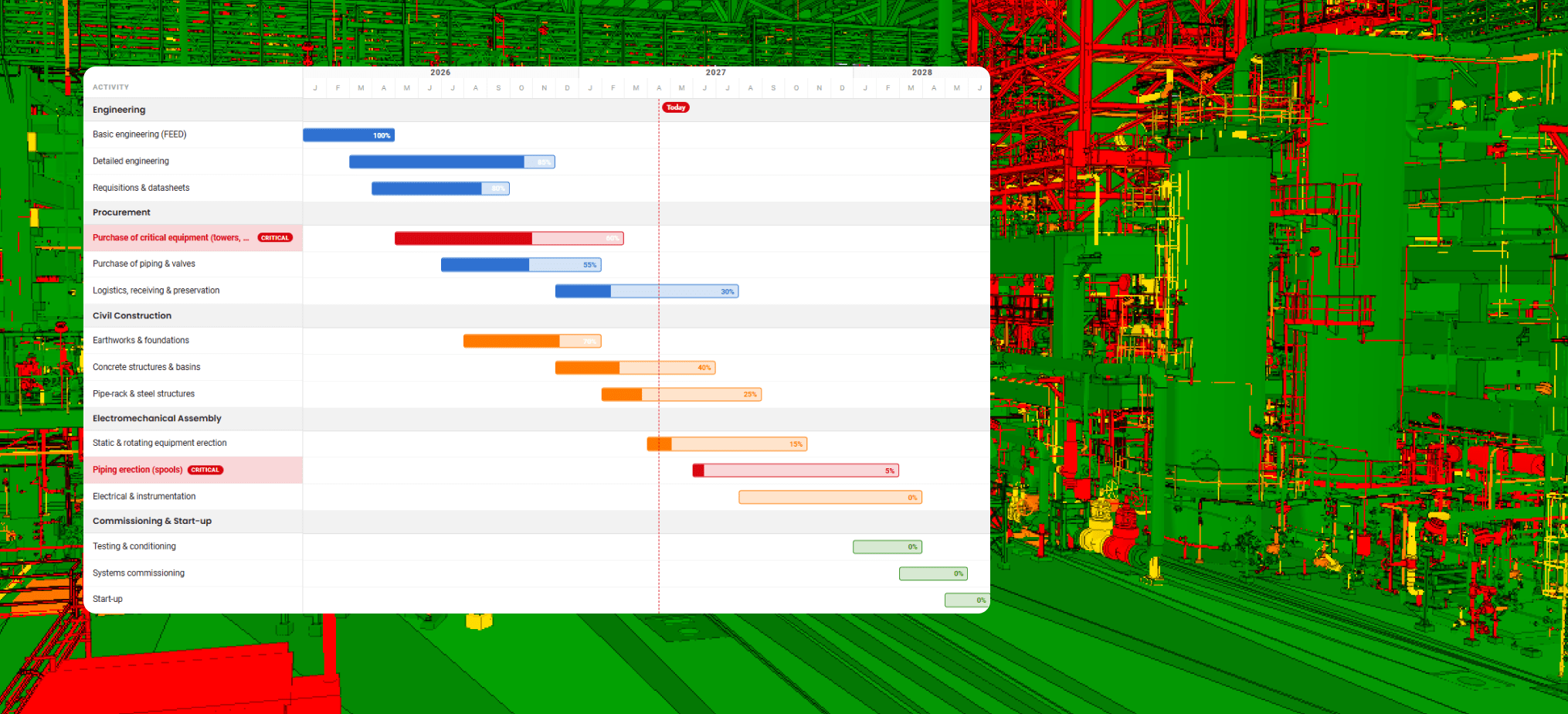
Project Progress Validation
Compare planned progress with observed field reality.
Design vs. Field Validation
Identify discrepancies between engineering models and actual field conditions before execution.
Construction Reality Mapping
Create a contextual visual layer connecting field captures to project assets.
Material Take-Off Reliability
Improve confidence in material quantities by validating existing conditions before procurement.
Project Progress Validation
Compare planned progress with observed field reality.
Why Traditional Site Verification Is No Longer Enough
Traditional project verification methods depend on:
As projects become more complex, these approaches create blind spots that delay decision-making.
Vidya enables a continuous understanding of project reality by combining visual data, spatial context and AI-driven analysis into a single source of truth.
Why Traditional Site Verification Is No Longer Enough
Traditional project verification methods depend on:
As projects become more complex, these approaches create blind spots that delay decision-making.
Vidya enables a continuous understanding of project reality by combining visual data, spatial context and AI-driven analysis into a single source of truth.
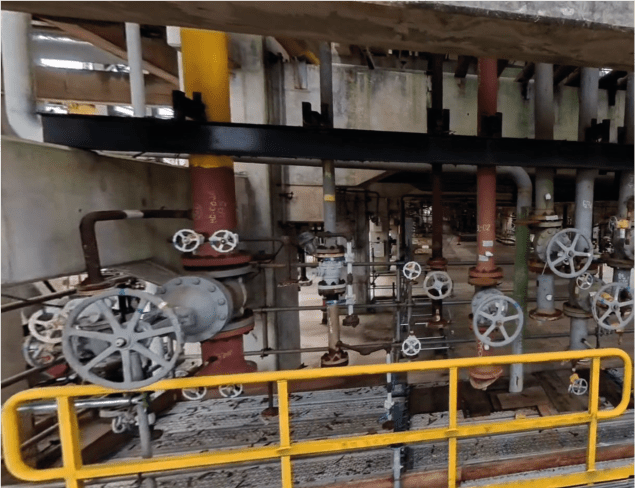
Improve Planning Accuracy Through Continuous Field Validation
The value of reality intelligence is not simply seeing the field, it is understanding how reality impacts engineering, procurement and construction decisions.
By continuously validating field conditions, EPCs and project owners can reduce uncertainty, improve planning accuracy and execute projects with greater confidence.
Improve Planning Accuracy Through Continuous Field Validation
The value of reality intelligence is not simply seeing the field, it is understanding how reality impacts engineering, procurement and construction decisions.
By continuously validating field conditions, EPCs and project owners can reduce uncertainty, improve planning accuracy and execute projects with greater confidence.
Field-Proven at Industrial Scale
DRM has already supported large-scale industrial verification workflows across complex assets
Field-Proven at Industrial Scale
DRM has already supported large-scale industrial verification workflows across complex assets
Ready to manege
EPC with ease
Schedule a demo and discover how Vidya helps EPCs and project owners reduce uncertainty before it impacts cost, schedule and execution.
During the session, we will: