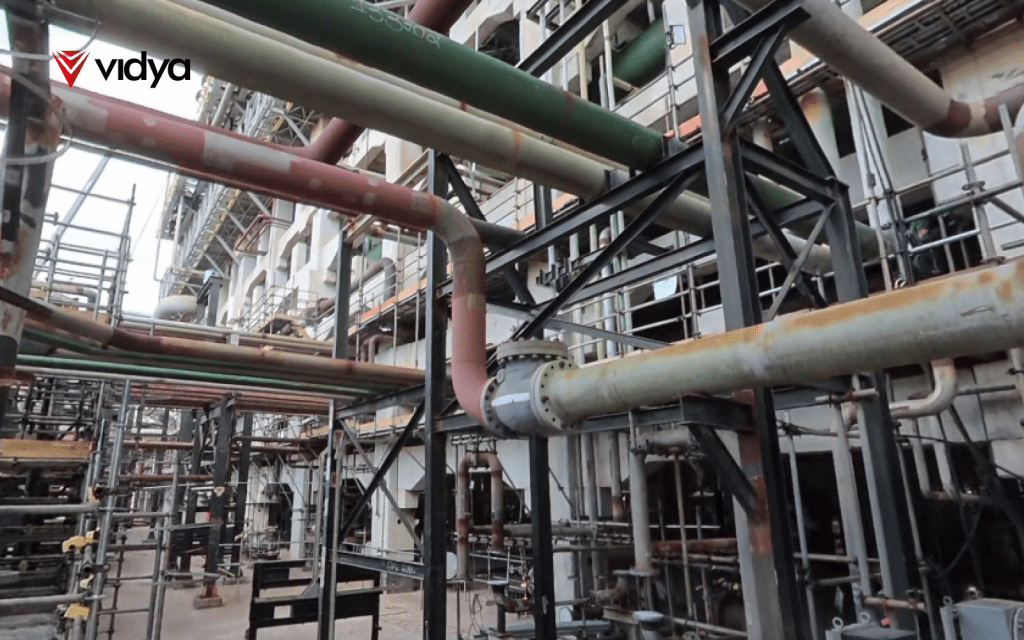
In industrial projects, the accuracy of the information used during planning directly influences execution performance. Schedules, contracting strategies, resource allocation, and procurement processes all depend on the quality of the data available to engineering teams. Among this information, few elements have as much impact as material quantities. They serve as the foundation for cost estimates, procurement planning, supplier engagement, and supply scheduling.
When they are accurate, they contribute to project predictability. When they are inaccurate, they can trigger a series of consequences that propagate throughout the entire execution phase. Despite advances in digital modeling and engineering tools, errors in material quantities remain a common reality in industrial projects, particularly in brownfield environments. And in most cases, the problem does not lie in the calculations themselves. It lies in the information used to perform them.
When Material Quantities Seem Correct, but Are Not
The development of material quantities has traditionally been treated as a technical activity based on available documents, models, and field surveys. However, the reliability of the result depends directly on how accurately that information reflects the physical reality of the asset. In industrial facilities that have undergone decades of operational modifications, expansions, and upgrades, it is common for differences to exist between the available documentation and the actual field configuration.
These changes are not always incorporated into the models and documents used by engineering teams. When this happens, material quantities begin to reflect a theoretical condition of the asset rather than its actual condition. As a result, seemingly minor errors during the planning phase can generate significant consequences during execution.
The Impact on Procurement and Supply Chain Operations
One of the first areas affected by inaccurate material quantities is the procurement process. When quantities are overestimated, financial resources are allocated to materials that may never be used. Beyond the direct budget impact, this creates additional costs related to logistics, storage, and inventory management.
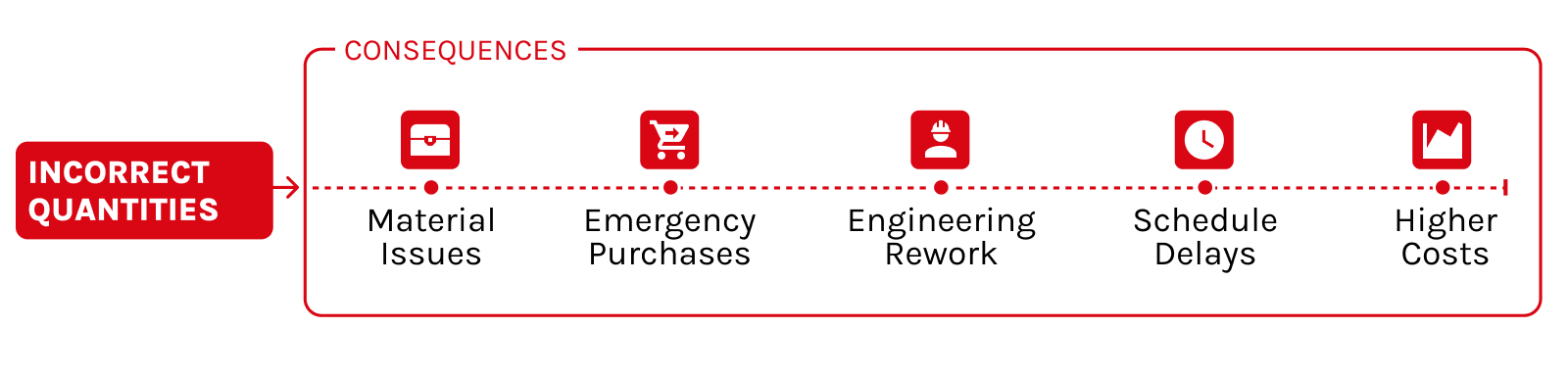
On the other hand, when critical materials are underestimated or omitted, the impact is often even greater. New purchasing processes must be initiated. Suppliers need to be engaged on an emergency basis. Delivery schedules become incompatible with the project timeline. Teams may remain idle while waiting for the arrival of essential components required to continue execution activities. In industrial projects, where certain equipment packages have manufacturing cycles measured in weeks or months, a single inconsistency can significantly compromise the original project plan.
The Effect on Schedules and Productivity
The impact of inaccurate material quantities is not limited to material supply. When a discrepancy is discovered during execution, it rarely affects only a single activity. Material changes frequently require engineering revisions. Engineering revisions can lead to new approvals. New approvals can impact procurement and planning activities. The result is a sequence of adjustments that affects the productivity of multiple teams simultaneously.
In addition, there is a less visible but equally important consequence: the loss of confidence in project information. When construction, procurement, and engineering teams begin to question the accuracy of available material quantities, additional validation processes are introduced into the workflow. Although these verifications are necessary, they also consume time, resources, and productive capacity.
The Challenge of Brownfield Projects
In greenfield projects, much of the information required to develop material quantities is generated throughout the project itself. In brownfield projects, however, the situation is different. Engineering teams must consider existing infrastructure that has often undergone years or even decades of modifications. The challenge is not only to define what will be built. It is also to understand what already exists accurately.
The greater the dependence on outdated documentation, the greater the risk of inconsistencies in the generated material quantities. For this reason, organizations operating refineries, chemical plants, terminals, and offshore platforms have been seeking more efficient ways to validate physical reality before initiating critical engineering and procurement activities.
The Importance of Validation Before Procurement
Historically, field validation has been treated as a one-time step within the project lifecycle. Today, that paradigm is beginning to change.As the costs associated with rework and scope changes continue to rise, there is growing recognition that validating physical reality before generating material quantities may be one of the most effective ways to reduce risk. The logic is simple. The earlier an inconsistency is identified, the smaller its impact on procurement, planning, and execution.
Instead of correcting errors after purchase orders have been issued or construction has already begun, teams can take a proactive approach, using more reliable information to support their decisions. For EPCs and industrial operators, this translates into greater financial predictability, better resource utilization, and lower exposure to unexpected changes throughout the project lifecycle.
How Vidya Addresses This Challenge
Vidya is a technology company focused on helping industrial organizations transform field reality into reliable, actionable intelligence. By combining artificial intelligence, spatial data, and engineering context, Vidya enables companies to make critical decisions based on a more accurate understanding of their assets and project environments. For EPCs and project owners, this means reducing uncertainty before it impacts engineering, procurement, construction, and project performance.
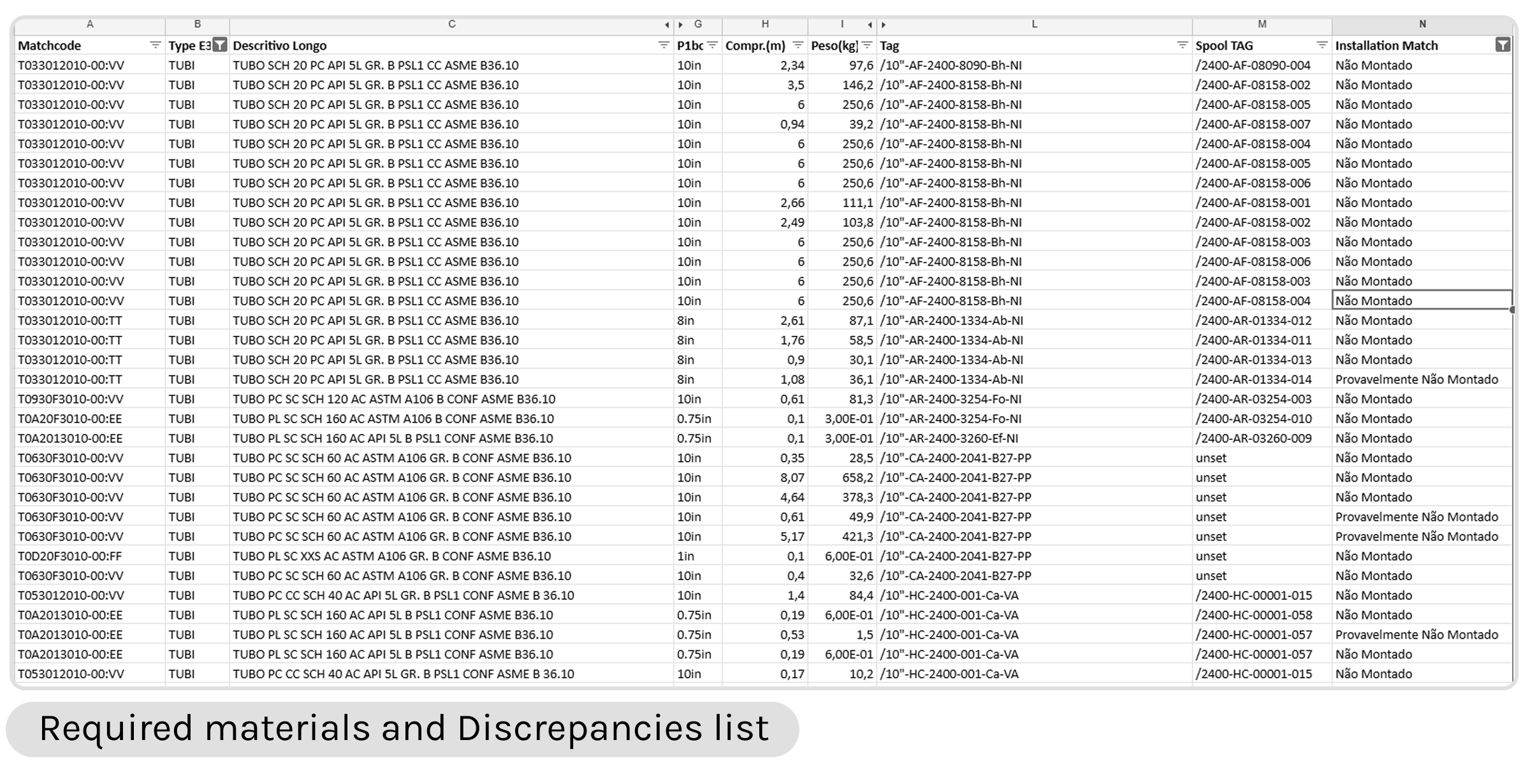
Vidya’s approach to this challenge is based on the need to increase the reliability of the information used by engineering teams before critical decisions are made. Through the Digital Reality Match (DRM) application, images captured in the field with 360° cameras and drones are linked to the facility’s digital models. The technology uses artificial intelligence to automatically compare the designed condition with the condition observed in the field, identifying discrepancies that may impact material quantities, planning, and execution.
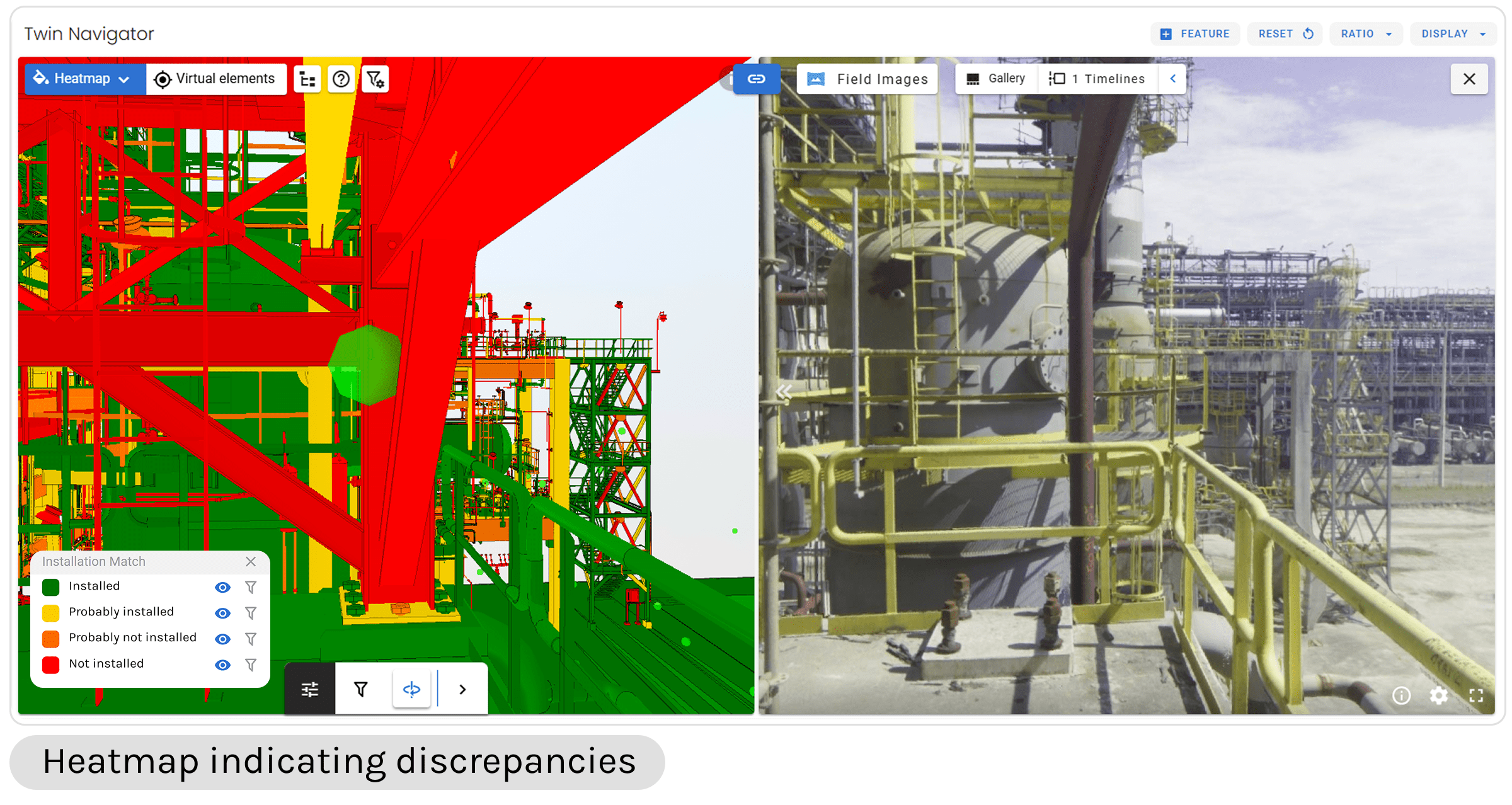
By enabling a more efficient validation of physical reality, the solution helps engineering teams identify inconsistencies before material lists are generated, purchase requisitions are issued, or resources are mobilized. Instead of relying exclusively on historical documentation or extensive manual verification processes, organizations gain access to a scalable approach for validating critical information throughout the project lifecycle. The result is a more reliable foundation for decision-making and for developing material quantities that accurately reflect the asset’s actual conditions.
Conclusion
The accuracy of material quantities influences far more than the material procurement process. It affects schedules, productivity, financial planning, and the overall ability to execute a project successfully. In increasingly complex industrial environments, the quality of material quantities no longer depends solely on engineering expertise. It also depends on the quality of the information used to describe the asset’s physical reality. In this context, reducing uncertainty before material quantities are generated is not simply a way to avoid waste. It is a way to increase project predictability and create stronger conditions for strategic decision-making throughout the entire project lifecycle. For EPCs and operators, the pursuit of more reliable material quantities begins long before the first spreadsheet is created. It begins with an accurate understanding of what truly exists in the field.
About the Author: Jorge Kawano