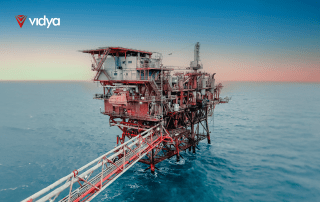
Decommissioning of Offshore Oil & Gas Structures
Decommissioning is the set of technical, environmental, and regulatory activities required to safely retire offshore oil and gas assets at the end of their productive life. It represents the definitive closure of operations and involves well plugging and abandonment, removal or repurposing of topsides and substructures, and the remediation of the seabed. More than a single engineering task, decommissioning is a multidisciplinary process that integrates offshore engineering, subsea operations, environmental science, logistics, and regulatory compliance. International conventions such as OSPAR, along with national regulatory frameworks and environmental legislation, establish strict requirements for how offshore assets must be retired. As a [...]
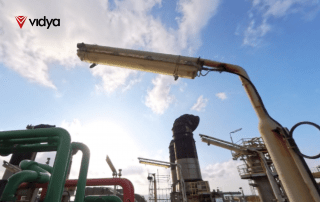
Preventing DROPS in Aging Industrial Plants: How Data-Driven Integrity Management Transforms Safety
Industrial plants, especially offshore units, are vast, interconnected systems made up of thousands of physical components that must operate in sync to guarantee safety and reliable production. From piping supports, valves, and flanges to walkways, structural beams, electrical brackets, and the piping networks that run across the asset, each element plays a specific role in maintaining operational stability. Yet the sheer scale and diversity of these elements create a core challenge: how to manage them all with accuracy, consistency, and agility. This is where the real issue emerges, an overwhelming volume of structural components paired with limited visibility into their [...]
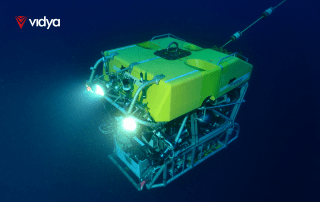
Subsea Integrity and Technology: Managing Wells in the Harshest Environment on Earth
We know a lot about planets that are millions of light-years away, but when it comes to the basement of our own house, it’s a different story. The bottom of the sea remains one of the least explored environments on Earth. While we invest enormous curiosity in what lies beyond our atmosphere, the vast underwater world, right beneath our feet, receives only a fraction of the attention. And yet, it is there, in this silent, dark, and pressurized frontier, that some of our most complex engineering feats take place. Hidden from sight, thousands of meters below the surface, critical assets [...]
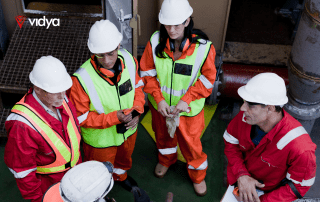
Understanding Shutdowns and Turnarounds: Building Long-Term Resilience in Energy
Production continuity is the gold standard in oil and gas operations, but it’s not always the best path to long-term efficiency, safety, or profitability. At some point in the lifecycle of every industrial asset, stopping becomes necessary. Shutdowns and turnarounds are moments of strategic pause that allow for essential maintenance, inspections, upgrades, and planning for the future. Far from being interruptions, these events are critical for operational excellence. Why Shutdowns Happen Shutdowns are usually driven by the need to preserve asset integrity, meet regulatory requirements, or integrate improvements. Over time, even the most robust equipment wears down, and [...]
Regulatory Compliance in Asset Integrity: What You Need to Know
In large-process industries, entire facilities operate under conditions of high pressure, high temperature, and elevated risk. Within this context, regulatory compliance is not a bureaucratic obligation—it is a technical imperative. Asset integrity, safety, and operational continuity depend on how well facilities meet and maintain regulatory standards, particularly for pressure-retaining equipment and critical infrastructure. This blog explores why Asset Integrity requires regulatory compliance and how operations can benefit from being transparent and compliant. Why Asset Integrity Requires Regulatory Compliance Maintaining the structural integrity of equipment such as pressure vessels, storage tanks, and interconnecting piping systems is essential for mitigating [...]
Difference Between Upstream, Midstream and Downstream
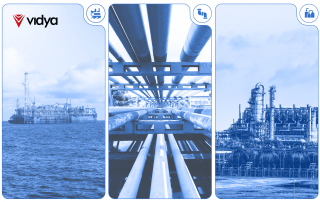
The Upstream, Midstream, and Downstream refer to the different stages of the petroleum value chain, each with intricate procedures and separate operational objectives. Despite their differences, these sectors are deeply interconnected, working together to overcome the challenges of exploration, production, transportation, storage, refining, and distribution of oil, natural gas, and their derivatives. Curiously, the terms 'Upstream' and 'Downstream' have roots outside the oil and gas industry, drawing inspiration from the Kanban methodology—a system originally developed to optimize workflows in manufacturing. Thus, understanding this origin provides valuable insights into how the industry’s segmentation reflects efficiency-driven principles. But are you familiar with [...]
Why Downstream Operations are the Heart of Petroleum
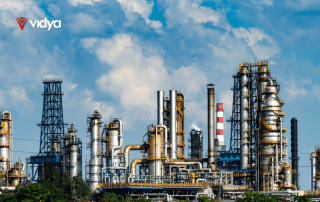
According to McKinsey, oil refineries can process nearly 100 million barrels of crude oil globally daily. Thus, given the presence and scalability of oil-derived products, downstream operations—industries responsible for transforming crude oil into fuels—may be the heart of the petroleum value chain. In comparison, the heart’s role doesn’t limit itself to pumping blood just as a petrochemical plant does to refining oil. Both are crucial to filtering impurities and fueling energy for the whole organism. Downstream: The heart of the Petroleum Value Chain Deepening the analogy, the heart receives deoxygenated blood from the body, sends it to the [...]
ROGe featured paper: Digitizing Corrosion Management and Fabric Maintenance
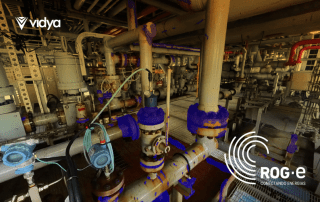
Vidya will present two technical articles regarding our deeptech solutions at ROGe 2024. The second presentation, which takes place on September 23rd, will discuss the Digital Fabric Maintenance application. The article showcases the application’s tracked and proven impact on the oil and gas industry. Get to know our article better in this blogpost: ''A case study of an alternative approach to digitize the management of external corrosion and fabric maintenance workflow of an offshore installation'' Corrosion poses a significant and inherent threat to the Oil and Gas industry, leading to equipment failure and production losses. For this purpose, [...]
Awarded paper: A Digital Approach for Safety Control and Process Intervention
Classified by the Bureau of Labor Statistics as one of the riskiest industries, oil and gas operations face numerous challenges, including equipment failures, accidents, and safety hazards. Certainly, this sector is subjected to safety threats due to the complex processes and hazardous environments in which it operates. For this reason, high-complexity facilities such as oil and gas need to target safety and risk assessments as fundamental pieces of operational management. In this context, Vidya presented two technical articles regarding our deeptech solutions at ROGe 2024. The first presentation, which took place on September 23rd, discusses the Digital Process Safety application. [...]
Making the most of POB on offshore assets
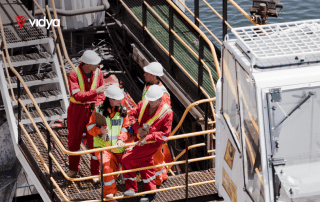
Offshore industrial operations are risky environments for on-site workers. This group of people, referred to as People on Board (POB), is responsible for inspecting, executing maintenance, and ensuring operational safety in the facility. However, oil and gas facilities may present risks that result in incidents such as explosions, dropped objects, oil leaks, and others. Besides that, unplanned events happen, requiring workers to have an immediate response to mitigate the occurrence. The International Association of Oil and Gas Producers reported a 36% increase in offshore fatalities from 2020 to 2021. In this context, oil industries have to deal with limitations [...]