Process Safety Management 101: Hazards, Barriers, and Digitalization
In one of Aesop’s most well-known fables, a boy repeatedly raises a false alarm about a wolf attacking his flock. After several false warnings, the villagers stop responding. When the wolf finally appears, no one comes, and the consequences are irreversible. Industrial facilities face a similar risk. Alarms, safeguards, and barriers are designed to signal or contain deviations before they escalate. But when alarms are unreliable, poorly configured, or excessively frequent, they lose credibility. Operators may become desensitized, and abnormal conditions can gradually be treated as routine. How can organizations ensure that warnings remain meaningful, that deviations are properly [...]
![Image of a woman using Vidya System Platforms [VSP] on a tablet.](https://vidyatec.com/wp-content/uploads/2025/11/1-capa-blog-CS@2x-320x202.png)
Beyond corrosion detection: How is Vidya’s System being used?
Corrosion. AI. Digital Twin. You already know that the Vidya System Platform (VSP) stands out in these disciplines. But what started as a corrosion-focused platform quickly became a versatile system for understanding and managing complex industrial realities. Its evolution reflects how technology and user demands continue to shape one another. But what else is possible to do within Vidya’s solution? Well, we asked our clients how they are using the VSP. Janaina Albino and Stefany Batista, Delivery and Customer Success Team From detecting corrosion to operating with ease Born as a corrosion-targeted solution, the scope and capabilities [...]

Why do most integration platforms fall short of expectations?
In industrial environments where downtime costs millions and safety is non-negotiable, simply linking systems is not enough. What truly matters is turning fragmented, raw information into structured intelligence that supports decision-making in real time. When done right, integration platforms can become much more than data pipelines. They provide the context, structure, and visibility that enable teams to focus on what is critical, anticipate risks, and execute with confidence. In this context, before understanding why most integration platforms fall short of expectations, it is important to define what an integration platform is. What is an integration platform? An integration [...]

Beyond Compliance: Integrating Process Safety and Asset Integrity in Offshore Oil & Gas
The evolution of safety in offshore oil and gas operations is closely tied to global advancements in safety culture, legislation, and best practices. A major turning point in offshore safety history was the shift from prescriptive, equipment-focused laws to performance-based and self-regulatory frameworks that emphasize systemic risk management, asset integrity, and human factors. From Frameworks to Function: Why Process Safety Became Central As offshore operations grew in complexity, the limitations of traditional safety models became clear. Regulatory evolution set the stage, but it was the industry's increasing awareness of systemic vulnerabilities that pushed for a deeper, more technical [...]

5 Steps to Strengthen Your Static Equipment Compliance Strategy
In large-process industries, static equipment such as pressure vessels, piping, and storage tanks represents the majority of operational machinery. While these assets may not move or rotate like pumps or turbines, their failure can be equally catastrophic, leading to safety incidents, production losses, and regulatory penalties. Understanding the nature and function of these assets is the first step toward building a robust and auditable integrity management framework. And, given the scale of risk involved, ensuring the integrity of static equipment is both a regulatory obligation and a strategic necessity. But what exactly qualifies as static equipment? And why does its [...]
Inside the Ora Viewer: Rebuilding Reality with Just a Few Images
Navigating complex environments, whether they are industrial plants, preservation sites, or hard-to-reach cultural landmarks, often involves significant logistical challenges and safety risks. From remote locations and confined spaces to weather exposure or fragile structures, many environments are difficult to access, document, or monitor regularly. In sectors like process industries, infrastructure, construction, tourism, and heritage conservation, obtaining an accurate spatial understanding of these environments typically requires on-site presence, specialized equipment, and significant resource investment. But what if there were another way? What if entire operational or historical spaces could be reconstructed using nothing more than a set of images, enabling remote, [...]
How Process Safety Strengthens Asset Integrity in the Energy Industry
In the energy industry, few things are as critical and as misunderstood as process safety. While personal safety focuses on preventing slips, trips, and falls, process safety is about ensuring the success of critical operational steps. In simple terms, process safety is the disciplined framework for preventing workflow disruptions that could lead to major incidents. These aren’t everyday events, but when they happen, the consequences are often devastating. That’s why process safety is so closely tied to Asset Integrity Management (AIM). If a facility is going to perform safely and operate as intended throughout its lifecycle, it must have strong, [...]
The 3 Stages of Asset Integrity Management in Energy
Asset Integrity Management (AIM) is a fundamental domain for large-process industries. It refers to the discipline that aims to maximize a production plant’s efficiency and reliability, involving multiple methodologies, systems, and various professionals and activities. This blog dives into how industry leaders approach AIM, encompassing a step-by-step structure to implement a robust program. Nonetheless, before understanding the current state of AIM, how did it evolve to such a complex and specific area? What is Asset Integrity Management? Asset Integrity Management (AIM) is the systematic approach to ensure the safety, reliability, and efficiency of industrial assets throughout their lifecycle. [...]

Why Big Companies struggle with Digital Transformation
In today's fast-paced, technology-driven world, the ability to embrace change is not just a strategic advantage, it's a survival imperative. To remain relevant and competitive, companies must navigate the turbulent waters of digital transformation. However, the sheer size and complexity of established companies, which once guaranteed stability and market dominance, now may become their Achilles' heel in the digitization process. In this context, understanding the critical need to embrace change becomes paramount, but what defines this digital transformation? What defines digital transformation? Digital transformation is the comprehensive integration of digital technologies into all areas of a business, fundamentally [...]
Why Reality Capture is a must to report anomalies in industrial inspections
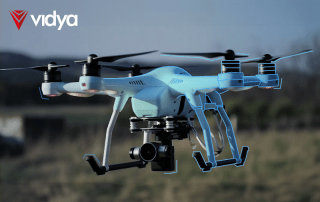
Industrial inspections consist of reporting anomalies to later perform maintenance plans. For this purpose, companies display several methods to inspect assets that can be divided into two major categories: the traditional methods and the digitized ones. In this context, these two groups present clear disparities in the benefits they generate to operators. While traditional methods still expose professionals to risky and time-consuming activities, new digitized ways of capturing reality have intuitively fostered safety and uptime for industrial inspections. Indeed, the new optimized methods of visually inspecting assets have accurately illustrated industrial realities to streamline maintenance actions. Thus, reporting anomalies with [...]