Why do most integration platforms fall short of expectations?
In industrial environments where downtime costs millions and safety is non-negotiable, simply linking systems is not enough. What truly matters is turning fragmented, raw information into structured intelligence that supports decision-making in real time. When done right, integration platforms can become much more than data pipelines. They provide the context, structure, and visibility that enable teams to focus on what is critical, anticipate risks, and execute with confidence. In this context, before understanding why most integration platforms fall short of expectations, it is important to define what an integration platform is. What is an integration platform? An integration [...]

Beyond Compliance: Integrating Process Safety and Asset Integrity in Offshore Oil & Gas
The evolution of safety in offshore oil and gas operations is closely tied to global advancements in safety culture, legislation, and best practices. A major turning point in offshore safety history was the shift from prescriptive, equipment-focused laws to performance-based and self-regulatory frameworks that emphasize systemic risk management, asset integrity, and human factors. From Frameworks to Function: Why Process Safety Became Central As offshore operations grew in complexity, the limitations of traditional safety models became clear. Regulatory evolution set the stage, but it was the industry's increasing awareness of systemic vulnerabilities that pushed for a deeper, more technical [...]

5 Steps to Strengthen Your Static Equipment Compliance Strategy
In large-process industries, static equipment such as pressure vessels, piping, and storage tanks represents the majority of operational machinery. While these assets may not move or rotate like pumps or turbines, their failure can be equally catastrophic, leading to safety incidents, production losses, and regulatory penalties. Understanding the nature and function of these assets is the first step toward building a robust and auditable integrity management framework. And, given the scale of risk involved, ensuring the integrity of static equipment is both a regulatory obligation and a strategic necessity. But what exactly qualifies as static equipment? And why does its [...]
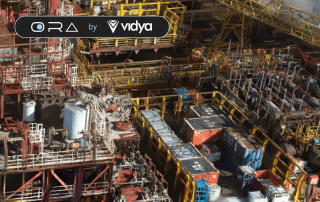
Inside the Ora Viewer: Rebuilding Reality with Just a Few Images
Navigating complex environments, whether they are industrial plants, preservation sites, or hard-to-reach cultural landmarks, often involves significant logistical challenges and safety risks. From remote locations and confined spaces to weather exposure or fragile structures, many environments are difficult to access, document, or monitor regularly. In sectors like process industries, infrastructure, construction, tourism, and heritage conservation, obtaining an accurate spatial understanding of these environments typically requires on-site presence, specialized equipment, and significant resource investment. But what if there were another way? What if entire operational or historical spaces could be reconstructed using nothing more than a set of images, enabling remote, [...]

FPSO Integrity 101: Challenges, Strategies, and the Path Forward
FPSOs (Floating Production, Storage, and Offloading units) sit at the intersection of extreme engineering and long-term economic strategy. Their presence in deep and remote offshore fields enables oil and gas production in places where fixed infrastructure would be impossible. Every component of the vessel is continuously exposed to harsh saltwater conditions, structural fatigue, variable loads, and mechanical stress. Corrosion slowly attacks hulls, risers, and topside equipment. Repetitive motions induced by waves and mooring tensions generate fatigue in welded joints and critical structures. And over time, these forces accumulate. And yet, many operators still treat integrity as a secondary concern [...]

How Process Safety Strengthens Asset Integrity in the Energy Industry
In the energy industry, few things are as critical and as misunderstood as process safety. While personal safety focuses on preventing slips, trips, and falls, process safety is about ensuring the success of critical operational steps. In simple terms, process safety is the disciplined framework for preventing workflow disruptions that could lead to major incidents. These aren’t everyday events, but when they happen, the consequences are often devastating. That’s why process safety is so closely tied to Asset Integrity Management (AIM). If a facility is going to perform safely and operate as intended throughout its lifecycle, it must have strong, [...]

AI, Computing, and What’s Next: What we learned at NVIDIA GTC 2025
Vidya Technology attended NVIDIA GTC 2025, widely known as the Super Bowl of AI, represented by Vinicius Bartolomeu, CPO at Vidya. This year’s event focused on the accelerated evolution of AI, with groundbreaking announcements that are redefining how we engage with the world. From scaling intelligent systems to increasing autonomy, integrating AI with the physical world, and exploring its convergence with quantum computing, GTC 2025 showcased a future that is already unfolding. These advancements are no longer just concepts—they are actively transforming industries, including the ones we work with at Vidya. Here are our key insights and takeaways from [...]

The 3 Stages of Asset Integrity Management in Energy
Asset Integrity Management (AIM) is a fundamental domain for large-process industries. It refers to the discipline that aims to maximize a production plant’s efficiency and reliability, involving multiple methodologies, systems, and various professionals and activities. This blog dives into how industry leaders approach AIM, encompassing a step-by-step structure to implement a robust program. Nonetheless, before understanding the current state of AIM, how did it evolve to such a complex and specific area? What is Asset Integrity Management? Asset Integrity Management (AIM) is the systematic approach to ensure the safety, reliability, and efficiency of industrial assets throughout their lifecycle. [...]

Spatial Computing 101: NeRFs vs. Gaussian Splatting
Navigating real-world environments virtually with the same level of precision, detail, and interactivity experienced in person. It may sound futuristic, but this is what Spatial Computing technologies offer—it leverages advanced algorithms to create 3D models of real-world environments, enabling users to interact with data in a more immersive way. And, despite its sci-fi definition, the potential applications are incredibly efficient, especially in industries like oil and gas, mining, refineries, and other large-process operations. Still, how can real-world scenarios be precisely recreated in a virtual setting? In most cases, when a reality-based 3D model is built, it doesn’t represent a 100% [...]

Industrial GenAI 101
Generative AI marks a groundbreaking milestone in the evolution of artificial intelligence, not just in its capabilities but in its reach and impact. While it may not be the single most important development in AI's history, it has certainly captured the public's attention like no other. Now, businesses of all sizes, across industries, can harness AI's power without needing a team of data scientists or advanced technical knowledge. According to Statista, the Generative AI market, which was just over $23 billion in 2022, surged to nearly $45 billion by the end of 2023. This rapid growth, averaging about $20 billion [...]