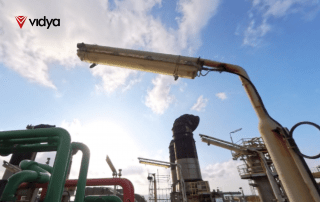
Preventing DROPS in Aging Industrial Plants: How Data-Driven Integrity Management Transforms Safety
Industrial plants, especially offshore units, are vast, interconnected systems made up of thousands of physical components that must operate in sync to guarantee safety and reliable production. From piping supports, valves, and flanges to walkways, structural beams, electrical brackets, and the piping networks that run across the asset, each element plays a specific role in maintaining operational stability. Yet the sheer scale and diversity of these elements create a core challenge: how to manage them all with accuracy, consistency, and agility. This is where the real issue emerges, an overwhelming volume of structural components paired with limited visibility into their [...]

Industry Tech Trends for 2026: What 2025 Taught us and Where We’re Heading Next
Learnings from 2025 and the Trends Steering Global Industries The year 2025 marked a turning point in the global technology landscape. After years of speculation and fragmented experimentation, artificial intelligence finally took center stage in a way that reshaped strategies across every industry. Enterprises moved from AI experimentation to large-scale adoption, a trend outlined by Gartner in their 2026 tech-trend report. According to the report, integrated systems such as “AI Supercomputing Platforms,” combining CPUs, GPUs, AI ASICs, and orchestration layers, have emerged as critical infrastructure to support heavy AI workloads. But 2025 was not only the year AI matured, [...]
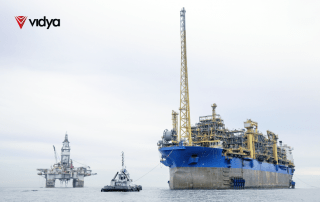
Understanding Asset Integrity Management and its Importance
Asset Integrity Management (AIM) refers to the discipline that aims to ensure industrial assets perform their functions accurately and efficiently throughout their lifecycle, all while maintaining safety and sustainability. In this context, a robust and effective asset integrity management program spans every stage, from asset design to decommissioning, aiming to mitigate risks to the environment, people on the field, and the industrial installation of which they are a part. This blog explores the major challenges of Asset Integrity Management and how the Oil and Gas industry is facing the digitalization of this important discipline. Signs of unoptimized asset [...]

The 4 Levels of the Digital Twin Technology
A disruptive technological concept has emerged, promising to reshape industries and redefine how we interact with the physical world. This concept is known as the Digital Twin. A Digital Twin is a virtual replica of a physical object or system, created by integrating real-time data and advanced analytics. It is a digital mirror, reflecting the real-world entity's properties, behaviors, and performance. By presenting the capability of generating simulations and analyses of complex systems the digital twin has enabled organizations to gain profound insights, optimize processes, and make more informed decisions. This technology has been used in industrial contexts to raise [...]
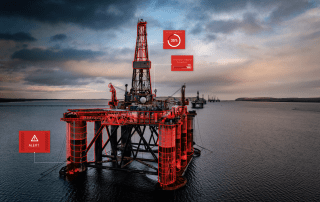
La importancia de la gestión de integridad de activos para la industria
La gestión de integridad de activos, Asset Integrity Management (AIM) en inglés, representa la capacidad de un activo industrial en desempeñar su función con precisión y eficacia, con tiempo de vida óptimo y seguridad adecuada. La gestión de activos es necesaria desde la fase de diseño hasta el final de su vida útil. Hay que tener en cuenta todas las etapas del proceso para que haya una gestión eficaz para predecir posibles riesgos para el medio ambiente, las personas involucradas y la instalación industrial que forman parte. En este post, exploraremos los principales desafíos de la gestión de la [...]
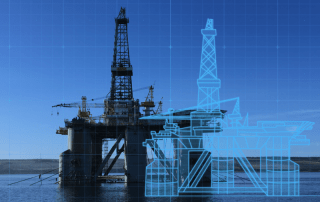
Los 3 niveles de la tecnología Digital Twin – 2023
La Industria 4.0 es una onda revolucionaria de la expansión científica que ofrece instrumentos cada vez más interconectados al sector industrial mediante el uso de la tecnología. Entre los diversos instrumentos surgidos de este movimiento, uno ha llamado la atención por su revolucionario resultado: El Digital Twin. Esta tecnología es utilizada en la industria para aumentar la productividad mediante la planificación y optimización del proceso de recopilación y análisis de datos a través de un flujo continuo de información entre un activo real y una réplica digital. Esta herramienta puede funcionar de una serie de maneras, y, sin embargo, [...]
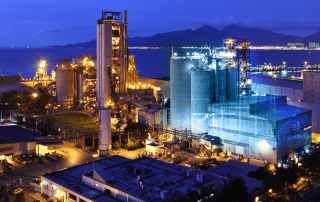
Unlocking the Potential: Exploring the Fascinating World of Digital Twin Technology
Digital twin is a technology that has gained great prominence over the past few years for generating amazing results. The technology emerges in the midst of a movement known as digital transformation, which has revolutionized the way companies relate to their customers, operate, and develop their products and services. What is a Digital Twin? Despite the big boom behind the digital twin the term was conceived in 2002 by Michael Grieves and has since been applied for different purposes. But how could we define a digital twin? Well, the technology consists of a digital [...]
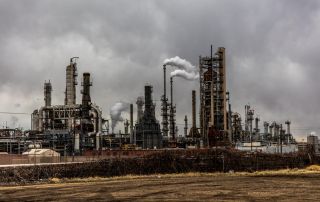
Benefits of Digital Twin in the Steel Industry
The application of new technologies in the most diverse industries has shown very positive results when it comes to greater control of the operation and improvement in results. In the case of steel industries, this scenario is intensified. Located in harsh environments and operated in critical situations, the digitization of processes and improved data collection and analysis has allowed these industries to reduce unplanned downtime, improve worker safety, and cut operational costs. As the main protagonist of this digital transformation, there is the Digital Twin. Here is a more detailed explanation of how Vidya's application of this technology can [...]

The active role of AI in industries’ future
Artificial intelligence has transformed the world through its application for different purposes around the globe. The recurrent use and interest in this technique have led to several developments that rapidly transformed the industrial operating environment through advances in computational techniques. Since 2020 we can notice an accelerated movement of digitalization driven by digital transformation and concepts previously presented in industry 4.0. The technologies developed in these periods and their fast emergence have provided enough visibility for broad application in complex tasks among production processes and industrial operations. The trend is that, in the coming years, the application [...]
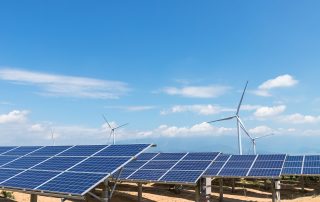
Perspectives for renewable energy sector
For at least 150 years, human activity has been the primary responsible for emissions of greenhouse gases into the atmosphere. The imminent threat of climate change has been pushing the need for energy transition by the industrial sector. Since the Kyoto protocol, industries have been developing roadmaps for a more sustainable operation with greater control over carbon emissions balanced with asset performance. Later, the Paris Agreement defined the need to contain global temperature by 2 degrees Celsius annually. And, in 2021, the COP26 (The United Nations Conference on Climate Change) reiterated the need for effective actions with [...]